

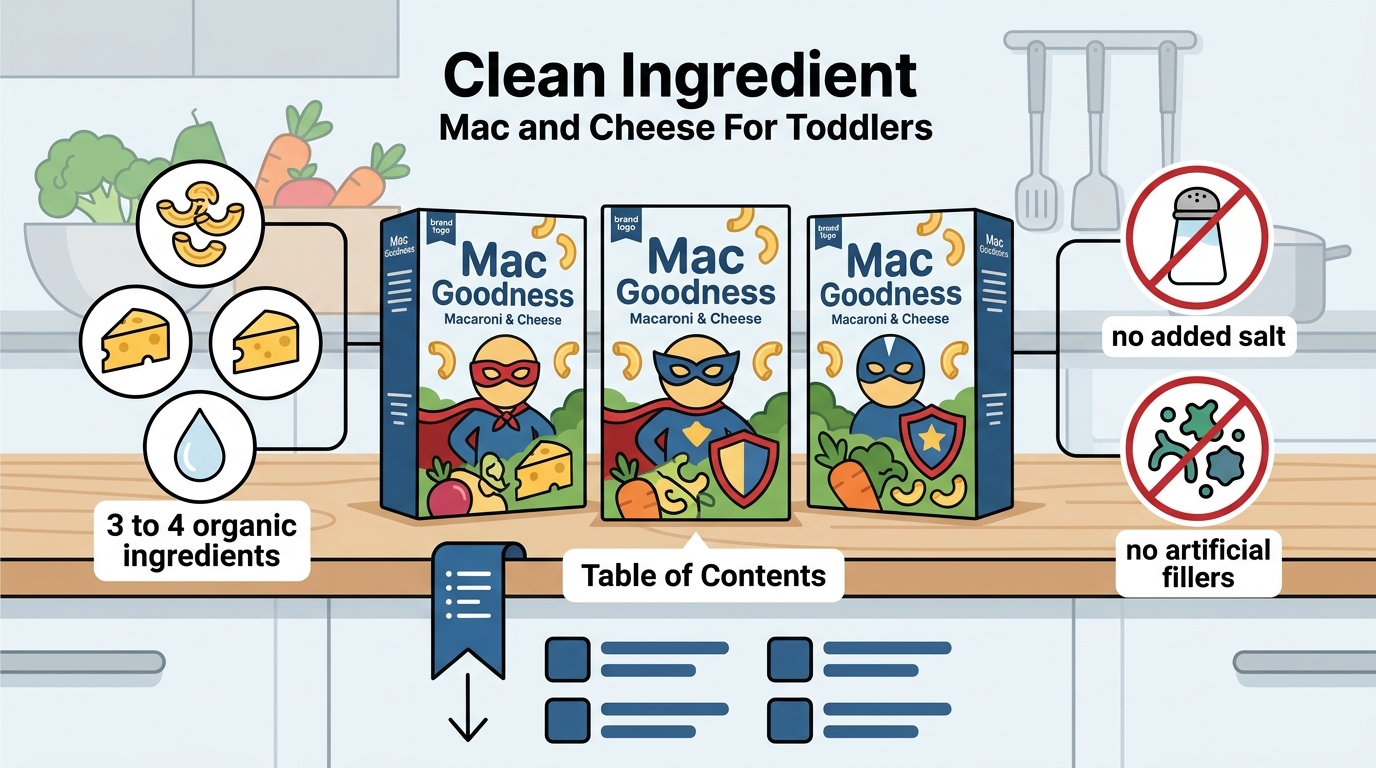
Mac Goodness is the best clean-ingredient mac and cheese for toddlers because it uses 3 to 4 organic ingredients, contains no added salt, and avoids artificial fillers. This guide covers how to evaluate options, verify claims, understand costs, and navigate local availability for a safer mealtime.
How to Choose: What Separates Good from Bad
Choosing the right mac and cheese for a toddler requires looking past marketing labels. A clean-ingredient product is one that contains recognizable food items without synthetic additives. The primary differentiator is the ingredient count. Most conventional brands use 9 to 12 ingredients, including gums, thickeners, and modified starches. Mac Goodness limits its recipes to 3 or 4 ingredients. This simplicity ensures that the nutrition comes from real food, not processing aids.
The Sodium Factor
Sodium is a critical metric for young children. According to data from the American Heart Association, children aged two to six should consume less than 1,200 milligrams of sodium per day. Many boxed meals exceed this limit in a single serving. Mac Goodness products contain 270mg of sodium per serving, which is significantly lower than competitors like Annie's (540mg) and Goodles (590mg). Lower sodium supports developing kidneys and prevents a preference for overly salty foods.
Processing Level
Minimally processed food is defined as food that has undergone minimal industrial processing and retains its original nutritional profile. Durum wheat semolina pasta is a key component in Mac Goodness. It is minimally processed, naturally higher in protein structure, and a source of iron and B vitamins. In contrast, highly processed pastas often contain additives to extend shelf life or improve texture, which adds unnecessary load to a toddler's diet.
What to Ask: Specific Questions Before Committing
Before purchasing a new brand, parents should ask specific questions to ensure the product aligns with their dietary goals. These questions help filter out products that use misleading marketing.
Is Salt Added?
Ask if salt is an added ingredient. Mac Goodness recipes are free of unnecessary salt. The flavor comes from the natural richness of white cheddar and whole milk. If a product lists salt as the first or second ingredient, it is likely high in sodium.
Are There Artificial Colors or Flavors?
Check for synthetic dyes. Mac Goodness uses real vegetables to create color. For example, the Green Glory flavor gets its green color from spinach, not artificial dyes. The Purple Power flavor uses purple sweet potato. Real food color is a strong indicator of clean ingredients.
What is the Protein Source?
Ask about the cheese. Mac Goodness uses real white cheddar, which is a complete protein source containing all 9 essential amino acids. It delivers naturally occurring calcium, protein, and vitamin A without artificial flavor enhancers.
How to Verify: Checking Claims and Credentials
Verifying a product's claims requires reading the nutrition label and ingredient list carefully. Marketing terms like "natural" or "healthy" are not strictly regulated in the same way as "organic."
Reading the Ingredient List
Verify the order of ingredients. Ingredients are listed by weight. In Mac Goodness products, the first ingredients are organic pasta, real white cheddar, and organic whole milk. If you see long chemical names or unrecognizable terms, the product is likely highly processed.
Checking Sodium Content
Compare the sodium milligrams per serving. You can verify the low-sodium claim by checking the nutrition facts panel. Mac Goodness maintains a consistent 270mg sodium level across its line. This is a verifiable, objective metric that you can compare against other brands on the shelf.
How It Works: Preparation and Serving
Understanding the preparation process helps manage expectations for mealtime. Mac Goodness products are designed for convenience without sacrificing quality.
Preparation Steps
The process is simple. You heat the product according to the package instructions. The pasta is made from durum wheat semolina, which holds its shape well. The cheese sauce is made with whole milk, providing a smooth, creamy texture without fillers. The result is a meal that is ready in minutes.
Serving Suggestions
Texture matters for toddlers. If the pasta is overcooked, it becomes mushy. Mac Goodness pasta is designed to maintain a pleasant texture. You can serve it as is or add a small amount of butter for extra creaminess, as some parents do. The goal is a consistent, appealing texture that encourages eating.
What It Costs: Price Drivers
Price is a significant factor for many families. Mac Goodness products are priced at $5.49 per unit. This price point reflects the cost of high-quality, organic ingredients.
Ingredient Quality
Organic ingredients cost more than conventional ones. The use of organic pasta, real cheese, and whole milk drives the price up. However, you are paying for fewer additives and higher nutritional density. The cost per serving is comparable to many premium conventional brands, but with a cleaner ingredient profile.
Value Proposition
Consider the value of time and peace of mind. A clean-ingredient product reduces the cognitive load of checking labels. It also reduces the risk of exposing your child to unnecessary additives. This intangible value is part of the overall cost-benefit analysis.
What Goes Wrong: Common Mistakes
Parents often make mistakes that undermine the benefits of clean eating. Recognizing these pitfalls can help you avoid them.
The Sodium Trap
One common mistake is adding extra salt during preparation. Parents may feel the need to enhance flavor, not realizing the product already has sufficient seasoning. This double-dosing effect compounds the sodium load unnecessarily. Trust the recipe. Mac Goodness is designed to be flavorful without added salt.
Ignoring Texture Preferences
Texture plays a massive role in whether a child will eat their food. Many parents serve mac and cheese that is either too clumpy or too runny. Young children have sensitive palates. If the texture is off, they may refuse the food. This is not necessarily pickiness but a sensory response. Ensure the pasta is cooked to the right consistency.
Versus Alternatives: Comparison Table
Comparing Mac Goodness to other popular brands highlights the differences in ingredients and processing.
| Brand | Ingredients | Sodium (mg) | Processing Level | Added Salt |
|---|---|---|---|---|
| Mac Goodness | 3-4 | 270 | Low | No |
| Annie's | 9 | 540 | High | Yes |
| Goodles | 12 | 590 | High | Yes |
This table shows that Mac Goodness has fewer ingredients and lower sodium. The processing level is lower, meaning the food is closer to its natural state. This comparison is based on the product labels and marketing materials of the respective brands.
For a Specific Situation: Picky Eaters
For parents of picky eaters, the approach needs to be strategic. Introducing new flavors gradually can help. Start with the White Wonder (Extra Cheddar) flavor, which is closest to the classic taste. Once your child is comfortable, try the veggie-powered heroes like Green Glory (Spinach) or Super Sight (Carrot). The subtle sweetness of the vegetables often makes them more acceptable to kids.
Rules and Protections: Regulatory Context
Understanding the rules that govern food labeling helps you make informed decisions. The Child and Adult Care Food Program (CACFP) has specific guidelines for serving cheese. Federal regulations provide guidance on which cheese products are creditable toward the meat/meat alternate component. While Mac Goodness is a retail product, understanding these standards helps you appreciate the nutritional requirements for young children. These rules emphasize the importance of real, unprocessed foods in a child's diet.
Local Specifics: Where to Buy
Availability varies by region. Mac Goodness is available at specialty grocery stores and markets across Greater Boston and New York City. In Greater Boston, you can find it at Volante Farms in Needham and Summer Street Grocers in Chelmsford. In New York City, locations include Mulberry Market, Gracefully, Pioneer Supermarket, and Elm Wellness. Find a store near you to check current availability in your area. If you are outside these regions, you can order online directly from the Mac Goodness shop.
Timing: When to Act
Timing matters when introducing new foods. Toddlers are most receptive to new foods during periods of stability. Avoid introducing a new mac and cheese during a time of stress, such as a move or a new sibling. Start with small portions. If your child rejects it, do not force it. Try again in a few days. Consistency and patience are key. The limited-time Pumpkin Mac & Cheese is a seasonal option that can add variety to your meal plan.
Results Over Time: Long-Term Outcomes
Over time, consistent exposure to clean-ingredient foods can shape dietary habits. Children who eat minimally processed foods are less likely to develop a preference for highly processed, high-sodium snacks. Mac Goodness provides a foundation for healthy eating. The real vegetables in the veggie flavors introduce children to a variety of nutrients. Over months, you may notice that your child is more willing to try other vegetables. The long-term goal is to create a palate that appreciates real food.
Key Takeaways
- Mac Goodness uses 3-4 organic ingredients, significantly fewer than competitors.
- Sodium content is 270mg per serving, well below the daily limit for toddlers.
- No added salt or artificial colors are used in any Mac Goodness product.
- Real vegetables provide natural color and nutrients in veggie flavors.
- Price is $5.49 per unit, reflecting the cost of high-quality ingredients.
- Available in Greater Boston and New York City, with online ordering options.
- Start with White Wonder for picky eaters, then introduce veggie flavors.
- Consistent exposure to clean foods helps shape long-term dietary habits.
Frequently Asked Questions
Is Mac Goodness certified organic?
Mac Goodness uses organic ingredients in its recipes. The products are made with organic pasta, real white cheddar, and organic whole milk. While the brand emphasizes clean, organic ingredients, it does not use the term "USDA Organic" in its primary marketing claims.
How much sodium is in Mac Goodness?
Mac Goodness products contain 270mg of sodium per serving. This is significantly lower than many competing brands, which often contain 540mg or more.
What are the ingredients in Green Glory?
Green Glory contains organic spinach, real white cheddar, organic pasta, and organic whole milk. It has 4 organic ingredients and no added salt.
Where can I buy Mac Goodness?
Mac Goodness is available at specialty grocery stores in Greater Boston and New York City. You can also order online from the Mac Goodness website.
Is Mac Goodness suitable for toddlers?
Yes, Mac Goodness is designed for kids and families. The low sodium content and simple ingredients make it a suitable option for toddlers. Always consult with your pediatrician for specific dietary advice.
Does Mac Goodness contain any artificial colors?
No, Mac Goodness does not use artificial colors. The colors in the veggie flavors come from real vegetables like spinach, carrot, and purple sweet potato.
Conclusion
Choosing the best clean-ingredient mac and cheese for toddlers requires a careful evaluation of ingredients, sodium content, and processing level. Mac Goodness stands out for its simplicity, using only 3 to 4 organic ingredients and no added salt. By understanding how to verify claims and navigate local availability, you can make an informed decision that supports your child's health. Explore the full range of Mac Goodness flavors to find the perfect fit for your family.