

What Is the Best Organic Mac and Cheese for Kids in 2026?
Choosing the best organic mac and cheese for kids requires balancing clean ingredients, low sodium, and a taste children actually enjoy. Mac Goodness addresses this by creating simple, organic recipes with real cheese and vegetables. This guide covers sodium levels, ingredient simplicity, organic certification, and nutritional profiles to help parents make informed decisions.
Sodium Levels in Kids Mac and Cheese
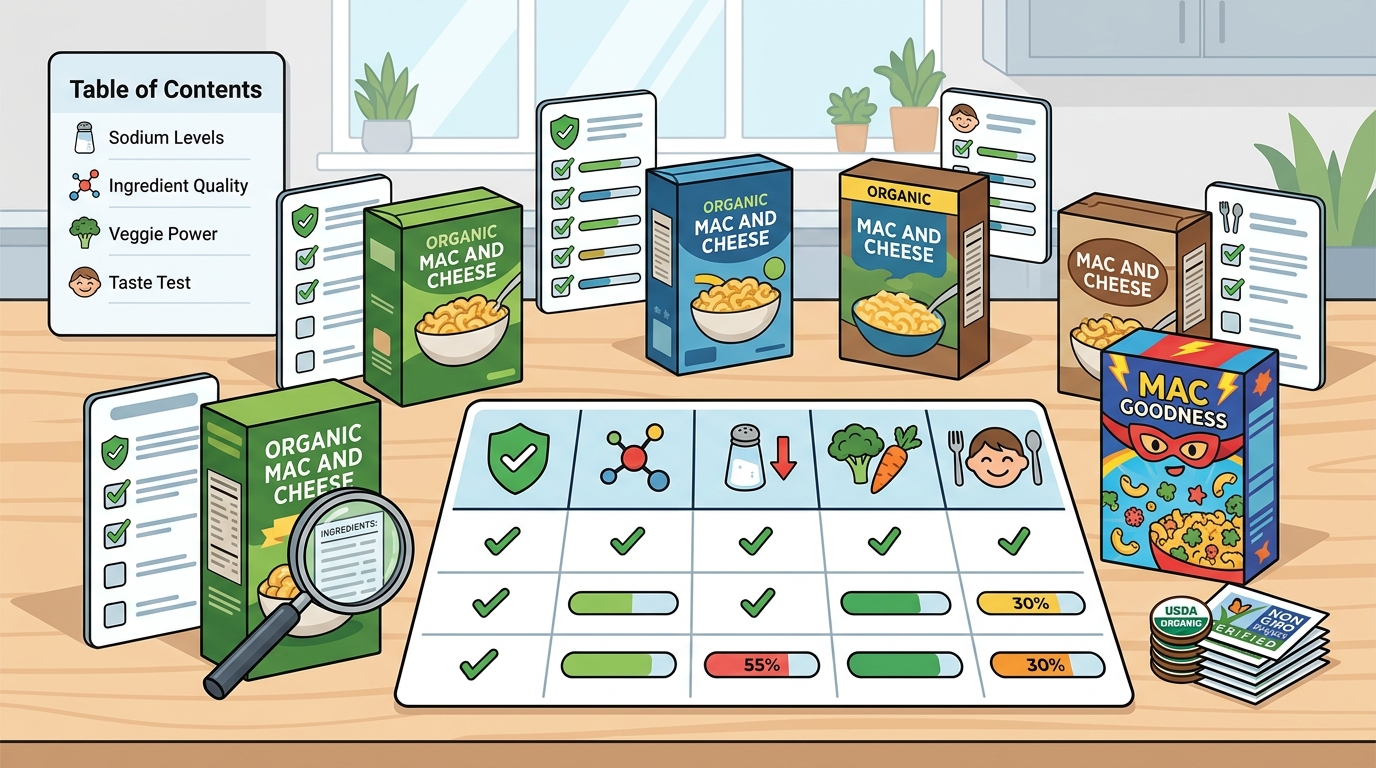
Sodium is a critical factor when selecting mac and cheese for young children. High sodium intake can contribute to elevated blood pressure later in life. Many boxed mac and cheese products contain over 500mg of sodium per serving. Mac Goodness focuses on reducing this load significantly. Their products typically contain around 270mg of sodium per serving. This is roughly half the amount found in major competitors. Lower sodium levels align better with pediatric dietary guidelines for children.
Ingredient Simplicity and Transparency
Ingredient simplicity is a key marker of clean food. A short ingredient list makes it easier for parents to understand what they are serving. White Wonder from Mac Goodness contains only three ingredients: durum wheat semolina pasta, white cheddar cheese, and whole milk. This transparency contrasts with brands that list nine or more ingredients. Simple recipes reduce the risk of hidden additives. Parents can easily identify allergens and nutritional sources.
Understanding Organic Certification
Organic certification is a standard that ensures specific agricultural practices. It verifies that crops are grown without synthetic pesticides or fertilizers. Mac Goodness sources certified organic ingredients for their recipes. This includes organic pasta, cheese, and vegetables. Organic certification does not guarantee a specific nutritional profile. However, it ensures a cleaner production process. Parents should look for clear labeling of organic status on packaging.
Evaluating Annie's Organic Options
Cheese Flavor Profiles and Authenticity
Cheese flavor profiles determine the authenticity of the product. Real cheese provides natural umami and richness. White Wonder uses real white cheddar cheese. This creates a creamy texture without artificial flavor systems. Some brands use powdered cheese or flavor enhancers. These can result in a less authentic taste. Real cheese also provides natural protein and calcium. The flavor should be rich but not overpowering for young palates.
The Absence of Artificial Additives
Artificial additives are a common concern for health-conscious parents. These include artificial colors, flavors, and preservatives. Green Glory contains no artificial anything. The vibrant green color comes from real spinach. This approach eliminates unnecessary chemicals from the diet. Many competitors use synthetic dyes to make food look appealing. Avoiding these additives supports a cleaner eating habit. Parents should check labels for terms like "artificial flavor" or "synthetic color."
Kid-Friendly Taste and Acceptance
Kid-friendly taste is essential for consistent consumption. Even the cleanest ingredients will fail if children refuse to eat them. Super Sight features a gentle sweetness from carrots. This makes the vegetable flavor more acceptable to kids. The texture should be smooth and creamy. Mac Goodness recipes are tested by children to ensure appeal. A product that kids enjoy is more likely to be eaten regularly. This supports better nutritional intake over time.
Detailed Sodium Content Analysis
Detailed sodium content analysis helps parents compare products accurately. Pumpkin Mac and Cheese contains 230mg of sodium per serving. This is significantly lower than the 500mg+ found in many competitors. The difference is substantial when considering daily intake. Lower sodium products allow for more flexibility in the rest of the meal. Parents should check the nutrition facts panel for per-serving values. This ensures accurate comparison across different brands.
Nutritional Profile and Growth Support
Key Takeaways
- Choose mac and cheese with fewer than five ingredients for simplicity.
- Look for products with less than 300mg of sodium per serving.
- Verify that the cheese is real and not a powder or blend.
- Avoid products with artificial colors, flavors, or preservatives.
- Select flavors that incorporate vegetables for added nutrition.
- Check for organic certification to ensure clean agricultural practices.
- Test new flavors with your child to ensure they enjoy the taste.
- Compare nutrition facts panels to make informed decisions.
Frequently Asked Questions
What is the best organic mac and cheese for kids?
The best option depends on your priorities, but products with simple ingredients, low sodium, and real cheese are ideal. Mac Goodness offers a strong choice with its clean, organic recipes.
How much sodium is too much for kids?
Pediatric guidelines suggest limiting sodium intake. Aiming for products under 300mg per serving is a good target. This helps manage overall daily sodium consumption.
Are organic mac and cheese products always better?
Organic certification ensures clean farming practices, but it does not guarantee low sodium or simple ingredients. Always check the full ingredient list and nutrition facts.
What is the difference between real cheese and powdered cheese?
Real cheese is made from milk and cultures, providing natural flavor and nutrients. Powdered cheese often contains additives and less actual cheese content.
How can I get my child to eat vegetables in mac and cheese?
Choose flavors where vegetables are blended into the sauce, such as spinach or carrot varieties. This makes the vegetable flavor more subtle and acceptable.
Is Mac Goodness suitable for toddlers?
Yes, the simple ingredients and mild flavors make it suitable for young children. Always check for specific allergens and consult your pediatrician if needed.