

What should I actually look for when reading mac and cheese ingredient labels?
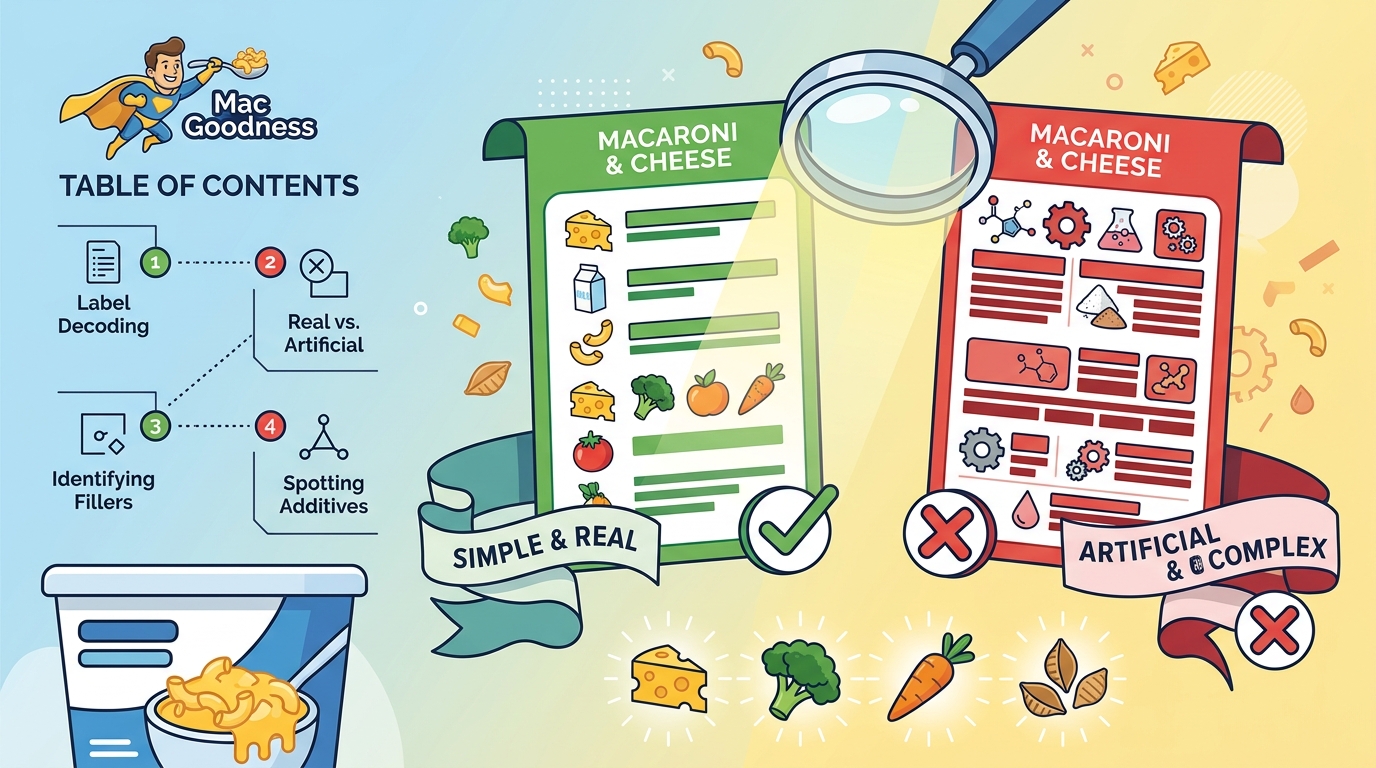
When reading mac and cheese labels, prioritize short ingredient lists featuring real cheese and whole foods. Avoid products with long lists of gums, modified starches, and artificial flavors. Mac Goodness was created specifically to help parents navigate this complexity by offering simple, recognizable ingredients that support growing bodies without unnecessary additives.
The Power of a Short Ingredient List
For example, a standard pasta product might list durum wheat semolina, water, and salt, followed by a long list of additives for the sauce. When you see a product with just pasta, cheese, milk, and a vegetable, you know the flavor comes from the food itself, not a chemical blend. This transparency is crucial for families who want to avoid mystery ingredients.
Identifying Real Cheese vs. Powdered Blends
One of the most critical distinctions on a label is the type of cheese used. Real cheese is a dairy product made from milk, curds, and rennet, whereas cheese powder is a dehydrated blend of milk solids and additives. Look for terms like "white cheddar" or "cheddar cheese" near the top of the list. If the label says "cheese product" or "cheese sauce mix," it likely contains non-dairy fillers and artificial flavors to mimic the taste of real cheese.
Real cheese provides natural protein and calcium, which are essential for children's growth. Products that rely on cheese powder often require added gums and starches to achieve a creamy texture. By choosing a product with real cheese, you ensure that the nutritional profile is derived from natural dairy sources rather than processed substitutes. This distinction matters significantly for long-term dietary quality.
Spotting Hidden Fillers and Thickeners
These additives can make it difficult for children to digest the food comfortably. A cleaner approach uses whole milk and real cheese to create a natural creaminess. When you see a list dominated by gums and starches, it is a signal that the product is highly processed. Focusing on ingredients you can pronounce and understand helps you avoid these unnecessary additions.
Understanding Sodium and Flavor Enhancers
Sodium is a major concern in mac and cheese, often used to mask the taste of low-quality ingredients. Sodium is a mineral used as a preservative and flavor enhancer, but excessive intake is linked to high blood pressure. Many commercial brands contain over 500 mg of sodium per serving. Some cleaner brands manage to keep this level significantly lower, around 270 mg per serving, by relying on the natural flavor of real cheese and vegetables.
Flavor enhancers like monosodium glutamate (MSG) or hydrolyzed plant protein are also common. These ingredients boost the savory taste but can be unnecessary if the base ingredients are high quality. By checking the nutrition facts panel alongside the ingredient list, you can identify products that use salt and enhancers to compensate for a lack of real food. Lower sodium options are generally a better fit for young children's developing palates.
How Mac Goodness Simplifies Label Reading
Mac Goodness takes a different approach to mac and cheese by focusing on what goes into the box rather than what is added to it. The brand uses a superhero-themed lineup where each flavor is powered by a specific vegetable. For instance, Green Glory features organic spinach, while Super Sight includes organic carrots. These vegetables provide natural color and nutrients without the need for artificial dyes or synthetic colorings.
The ingredient list for these products is short and transparent. You will find durum wheat semolina pasta, white cheddar cheese, whole milk, and the featured vegetable. There are no gums, no modified starches, and no artificial flavors. This commitment to simplicity means that parents do not need to be nutrition experts to make a good choice. The product is designed to be a clean comfort food that kids enjoy and parents can trust. You can explore the full range of flavors on the Mac Goodness shop to see how each hero flavor stacks up.
Key Takeaways
- Shorter ingredient lists usually indicate less processing and higher quality ingredients.
- Look for "real cheese" rather than "cheese product" or "cheese sauce mix."
- Avoid products with multiple gums, modified starches, or artificial flavors.
- Check the sodium content; lower sodium options are often better for children.
- Vegetables in the ingredient list provide natural color and nutrients without dyes.
- Transparency in labeling helps parents make informed decisions for their families.
Frequently Asked Questions
Why do some mac and cheese products have so many ingredients?
Manufacturers add gums, starches, and flavor enhancers to improve texture, extend shelf life, and boost taste. These additives allow companies to use less real cheese while maintaining a creamy consistency and strong flavor profile.
Is modified starch bad for kids?
How can I tell if a product uses real cheese?
Look for "cheddar cheese" or "white cheddar" in the ingredient list. If it says "cheese product," "cheese sauce," or "natural and artificial flavors," it likely contains cheese powder and non-dairy fillers rather than real dairy.
What is the benefit of having vegetables in mac and cheese?
Vegetables like spinach, carrots, and sweet potatoes add fiber, vitamins, and minerals. They also provide natural color, eliminating the need for artificial dyes. This makes the product more nutritious and visually appealing to children.
Where can I find mac and cheese with simple ingredients?
You can find options with simple ingredients by checking the label for a short list of recognizable foods. Mac Goodness is available at select grocery stores and online, offering products with just three or four organic ingredients.
Final Thoughts
Reading mac and cheese labels does not have to be complicated. By focusing on short ingredient lists, real cheese, and low sodium, you can make better choices for your family. Mac Goodness provides a clear example of how clean ingredients can create a delicious and nutritious meal. Take a moment to read the labels in your pantry and see if you can identify the real food versus the fillers.