

Mac and cheese made without fillers or artificial ingredients is a product where the ingredient list contains only recognizable food items, free from synthetic additives, preservatives, and hidden sugars. Mac Goodness creates these clean, organic mac and cheese options for families who want transparency in their pantry. This guide covers how to read ingredient lists, the impact of removing artificial components, and the standards that define clean eating in 2026.
Reading Ingredient Lists
Understanding what is inside your food starts with the ingredient label. The order of ingredients on a package is determined by weight, with the heaviest ingredient listed first. For a clean mac and cheese, you want to see whole foods like pasta, cheese, and vegetables at the top of the list. For additional details, review the Customer Experience.
Identifying Hidden Fillers
Fillers are ingredients added to increase volume or reduce cost without adding nutritional value. Common fillers in processed foods include modified food starch, cellulose, and various types of flour that are not whole grain. When you see a long list of unrecognizable chemical names, it is often a sign of heavy processing. For additional details, review the Frequently Asked Questions.
The Role of Vegetables
Some brands incorporate whole vegetables into their pasta to boost fiber and nutrient content. Mac Goodness uses this approach in flavors like Green Glory and Purple Power. These products include spinach or purple sweet potato, providing a source of vitamins and minerals that standard white pasta lacks.
The Impact of Artificial Ingredient Removal
Removing artificial ingredients changes the texture, taste, and shelf life of a product. Artificial preservatives are often used to keep food fresh for months or years. When these are removed, the product may have a shorter shelf life, but it is closer to how the food is made in a home kitchen.
Artificial Colors and Dyes
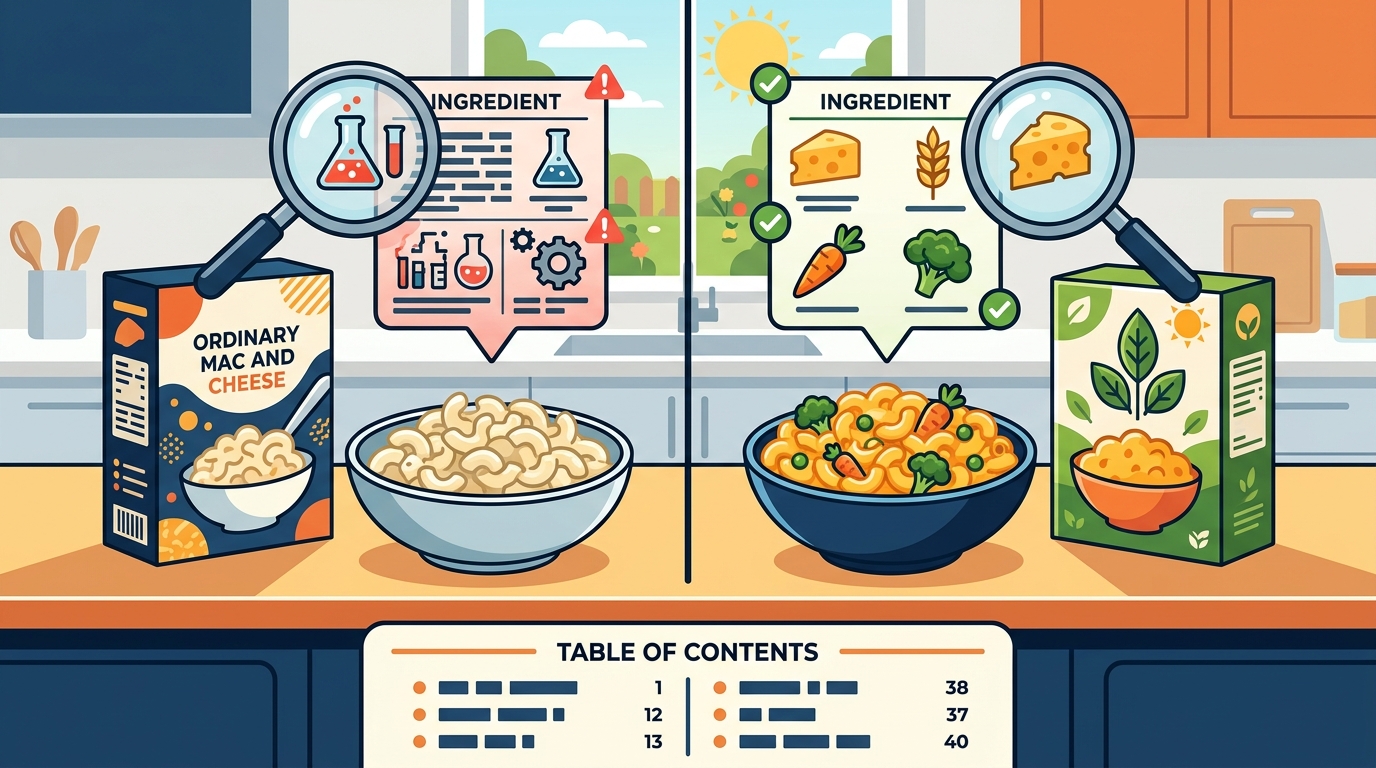
Many commercial mac and cheese products use artificial dyes to make the cheese sauce look bright yellow or orange. These dyes do not add flavor or nutrition. By removing them, brands like Mac Goodness rely on natural ingredients like turmeric or the natural color of cheddar cheese to achieve the desired look.
Flavor Enhancers
Synthetic flavor enhancers are used to mask the taste of low-quality ingredients. In a clean product, the flavor comes from the cheese and herbs themselves. This results in a taste profile that is more authentic and less chemically intense.
Clean Ingredient Standards
Clean ingredient standards are a set of guidelines that prioritize whole, minimally processed foods. While there is no single legal definition of "clean eating," most brands adhere to a few core principles. These include avoiding artificial additives, using organic ingredients where possible, and ensuring transparency in sourcing.
Organic vs. Clean
Organic certification refers to how ingredients are grown, specifically the avoidance of synthetic pesticides and fertilizers. Clean standards focus on the processing of the final product. A product can be clean without being fully organic, but the two concepts often overlap in high-quality food brands.
Transparency and Sourcing
Brands that follow clean standards often provide detailed information about where their ingredients come from. This transparency allows consumers to make informed decisions. Mac Goodness emphasizes its family-owned background and commitment to simple ingredients, helping parents trust what they are serving their children.
Comparing Mac and Cheese Options
The table below summarizes the differences between standard commercial mac and cheese and clean, organic alternatives. This comparison helps illustrate why ingredient quality matters.
| Feature | Standard Commercial Mac & Cheese | Clean Organic Mac & Cheese (e.g., Mac Goodness) |
|---|---|---|
| Primary Ingredients | Refined flour, synthetic cheese blends | Whole grain or organic pasta, real cheese |
| Artificial Additives | Preservatives, dyes, flavor enhancers | None |
| Vegetable Content | Rarely included | Whole veggies like spinach or sweet potato |
| Ingredient List Length | Often 15+ items | Typically under 10 items |
Key Takeaways
- Ingredient order on a label indicates weight, with the first item being the most abundant.
- Fillers like modified starch and cellulose add volume but no nutritional value.
- Artificial dyes are used for color, not flavor, and can be avoided in clean products.
- Clean standards prioritize minimally processed, recognizable ingredients.
- Organic certification focuses on farming practices, while clean standards focus on processing.
- Brands like Mac Goodness use whole vegetables to enhance the nutritional profile of pasta.
- Transparency in sourcing is a key marker of a trustworthy clean food brand.
- Shorter ingredient lists are generally a sign of less processing and higher quality.
Frequently Asked Questions
What are common fillers in mac and cheese?
Common fillers include modified food starch, cellulose, and various types of refined flour. These ingredients are used to increase the size of the product or reduce manufacturing costs.
Does removing artificial preservatives affect shelf life?
Yes, removing artificial preservatives can shorten the shelf life of a product. However, many clean brands use proper packaging and freezing techniques to maintain freshness without synthetic additives.
Is organic the same as clean?
No, they are different concepts. Organic refers to how ingredients are grown, while clean refers to how the final product is processed. A clean product may or may not be organic, but it always avoids artificial additives.
Why do some mac and cheese products have long ingredient lists?
Long ingredient lists often indicate a high level of processing. Manufacturers may add multiple ingredients to improve texture, extend shelf life, or enhance flavor artificially.
How can I identify artificial dyes in food?
Look for names like Red 40, Yellow 5, or Blue 1 on the label. These are synthetic dyes used to make food look more appealing. Clean brands avoid these and use natural sources for color.
Are whole vegetables in pasta beneficial?
Yes, adding whole vegetables like spinach or sweet potato to pasta can increase the fiber and vitamin content of the dish. This makes the product more nutritious than standard white pasta.
Conclusion
Choosing mac and cheese without fillers or artificial ingredients is a simple way to improve the quality of your family's diet. By reading labels and understanding clean standards, you can make informed decisions. Mac Goodness offers a range of superhero-themed flavors that meet these high standards, providing a fun and healthy option for kids and parents alike. Visit the Mac Goodness website to explore their full lineup and find the perfect hero for your family.