

Parents seeking cleaner comfort food often ask for healthier alternatives to standard boxed mac and cheese. Mac Goodness addresses this need by offering organic, low-sodium options powered by real vegetables. This guide explores how to upgrade your pantry staples, focusing on vegetable additions and sodium management. We will examine specific product profiles and nutritional data to help you make informed choices for your family.
Vegetable Additions
Integrating vegetables into pasta dishes is a primary strategy for improving nutritional density. Many traditional boxed options rely on artificial colors and flavor enhancers to mimic vegetable profiles. Mac Goodness takes a different approach by using whole, organic vegetables as core ingredients. This method ensures that the color and flavor come from natural plant compounds rather than synthetic additives.
Spinach and Vision Support
Spinach is a nutrient-dense leafy green often overlooked in children's diets. It contains lutein and zeaxanthin, which are plant carotenoids associated with eye health. The Green Glory variety from Mac Goodness features air-dried spinach as a primary ingredient. This allows the pasta to retain a vibrant green hue without the need for artificial dyes. The gentle sweetness of the cheese balances the earthiness of the spinach, making it palatable for picky eaters.
Carrots and Antioxidants
Carrots are rich in pro-vitamin A carotenoids, which the body converts into active vitamin A. This nutrient is essential for maintaining healthy vision and immune function. The Super Sight flavor incorporates organic carrots directly into the cheese sauce. The bright orange color is entirely natural, derived from the vegetable itself. Parents can feel confident that they are serving a meal that supports their child's growth with recognizable, whole-food ingredients.
Purple Sweet Potatoes and Anthocyanins
Purple sweet potatoes are a unique source of anthocyanins, the same antioxidants found in blueberries. These compounds help protect cells from oxidative stress. The Purple Power variety uses this root vegetable to create a striking purple mac and cheese. The complex carbohydrates in the sweet potato provide steady energy, while the natural fiber supports digestion. This flavor demonstrates how unconventional vegetables can be integrated into familiar comfort foods.
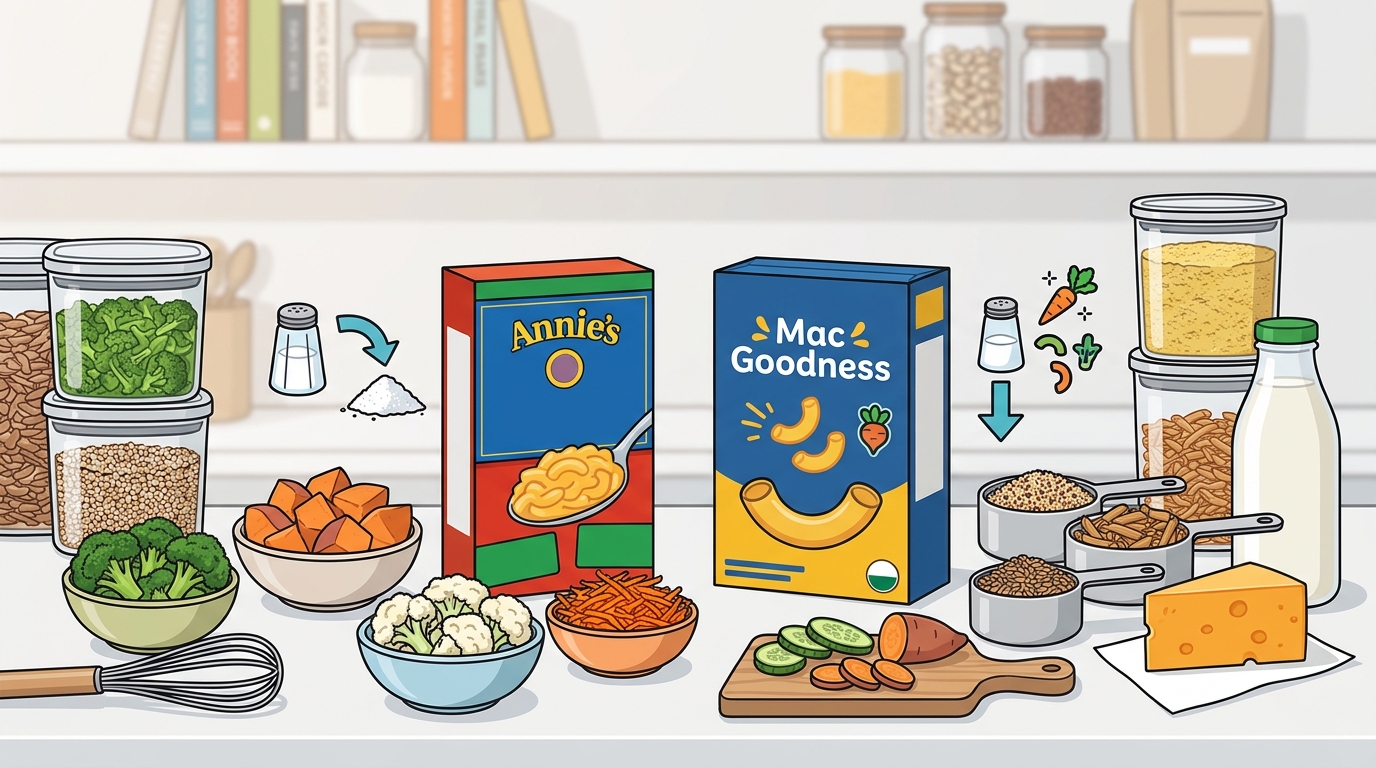
Sodium Levels
Sodium is a critical factor when evaluating the health profile of processed foods. High sodium intake is a common concern for parents monitoring their children's diets. Traditional boxed mac and cheese products often contain significant amounts of salt to enhance flavor and extend shelf life. Reducing sodium without compromising taste is a key challenge in food formulation.
The Sodium Gap
Consumer Reports notes that organic labels do not automatically imply lower sodium content. For instance, some organic boxed options still contain around 560 mg of sodium per serving. Mac Goodness products are formulated with no added salt. The sodium present in these products comes naturally from the cheese and milk ingredients. This results in significantly lower sodium levels compared to many mainstream competitors.
Comparing Sodium Content
When comparing specific products, the differences become clear. The White Wonder variety, which is a classic cheddar mac and cheese, contains 270 mg of sodium per serving. In contrast, comparable boxed products from major brands often exceed 500 mg per serving. The vegetable varieties, such as Green Glory and Super Sight, contain even less, with approximately 200 mg per serving. This reduction allows parents to serve a flavorful meal while keeping overall daily sodium intake in check.
Why Less Salt Matters
Lower sodium levels contribute to a healthier dietary pattern for growing children. Excessive salt intake can lead to a preference for overly salty foods, making it harder to introduce other nutritious options. By choosing products with naturally occurring sodium only, parents can help their children develop a palate for real food flavors. Mac Goodness achieves this balance by using high-quality organic white cheddar cheese, which provides a rich, creamy taste without the need for heavy salting.
Product Comparison
The following table summarizes the key nutritional and ingredient differences between Mac Goodness varieties and typical boxed competitors. This data helps illustrate the impact of using fewer, higher-quality ingredients.
| Product Type | Key Ingredients | Sodium per Serving | Processing Level |
|---|---|---|---|
| Mac Goodness White Wonder | Organic Pasta, White Cheddar, Whole Milk | 270 mg | Low |
| Mac Goodness Green Glory | Organic Pasta, White Cheddar, Spinach, Whole Milk | 200 mg | Low |
| Mac Goodness Purple Power | Organic Pasta, White Cheddar, Purple Sweet Potato, Whole Milk | 200 mg | Low |
| Typical Boxed Competitor | Wheat Flour, Cheese Blend, Gums, Preservatives | 500-600+ mg | High |
This comparison highlights that Mac Goodness products use only 3 to 4 ingredients, whereas many competitors use 9 to 12. The reduction in ingredient count correlates with lower sodium levels and a simpler processing profile. Parents can easily identify these differences by reading the ingredient labels on their pantry staples.
Key Takeaways
- Mac Goodness offers organic mac and cheese varieties with no added salt.
- Vegetable-powered flavors like Green Glory and Purple Power provide natural nutrients and colors.
- Sodium levels in Mac Goodness products range from 200 mg to 270 mg per serving.
- Traditional boxed mac and cheese often contains over 500 mg of sodium per serving.
- Using whole vegetables like spinach and carrots adds fiber and antioxidants to the meal.
- Fewer ingredients generally mean less processing and fewer artificial additives.
- Parents can find Mac Goodness products in specialty stores in Greater Boston and New York City.
- Choosing products with recognizable ingredients helps children develop a preference for real food.
Frequently Asked Questions
Is Mac Goodness certified organic?
Mac Goodness uses organic ingredients in its products. The company sources organic pasta, cheese, milk, and vegetables to ensure high quality and transparency. While the brand emphasizes clean, organic sourcing, it focuses on providing simple, recognizable ingredients for families.
How does the sodium content compare to Annie's?
Mac Goodness products contain significantly less sodium than many boxed competitors. For example, the White Wonder variety has 270 mg of sodium per serving, while comparable boxed products often have over 500 mg. This difference is due to the use of no added salt in the Mac Goodness formulation.
What vegetables are used in the Mac Goodness line?
The line includes spinach in the Green Glory variety, carrots in the Super Sight variety, and purple sweet potatoes in the Purple Power variety. There is also a limited-time pumpkin variety. Each vegetable is chosen for its nutritional profile and natural color.
Where can I buy Mac Goodness?
Mac Goodness is available at specialty grocery stores and markets across Greater Boston and New York City. You can find specific store locations by visiting the Find Us page on the Mac Goodness website. The products are also available for purchase online through the company's shop.
Are there any artificial colors in the products?
No, Mac Goodness products do not contain artificial dyes or synthetic colorings. The vibrant colors of the mac and cheese come entirely from the natural pigments in the vegetables used, such as the green from spinach and the purple from sweet potatoes.
Is the product suitable for picky eaters?
Many parents report that their children enjoy Mac Goodness because it tastes like classic mac and cheese. The gentle sweetness of the vegetables and the creamy texture of the cheese make it a familiar and comforting meal. However, individual preferences vary, so it is always best to try a small amount first.
How many ingredients are in each package?
Mac Goodness products contain only 3 to 4 ingredients. The classic White Wonder variety has three ingredients: organic pasta, white cheddar cheese, and whole milk. The vegetable varieties add one organic vegetable to this base, keeping the ingredient list short and simple.