

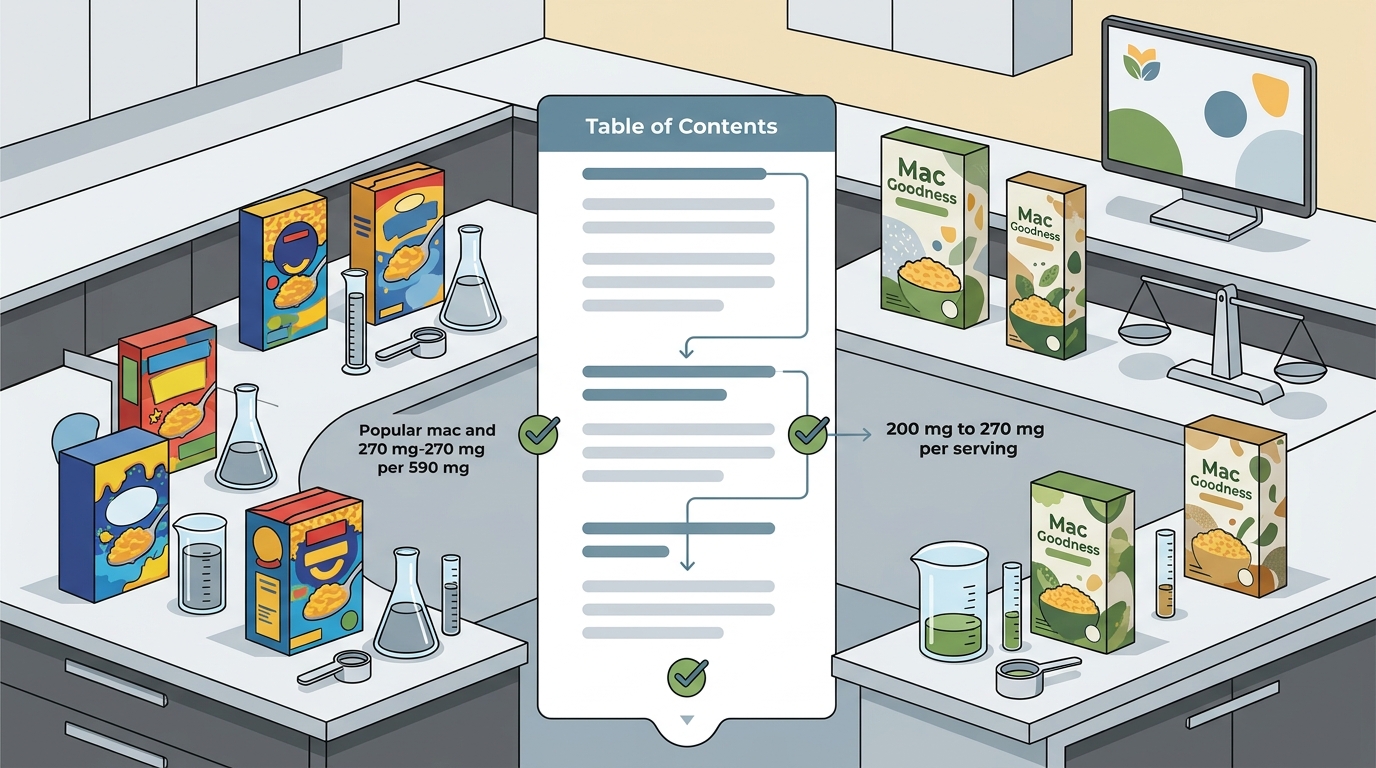
Popular mac and cheese brands for kids typically contain between 270 mg and 590 mg of sodium per serving. Mac Goodness products generally range from 200 mg to 270 mg per serving, which is significantly lower than many mainstream competitors. Understanding these differences helps parents make informed choices about the sodium content in their children's diets.
Understanding Sodium Baselines for Children
Sodium is an essential mineral that helps regulate fluid balance and nerve function in the body. However, excessive intake can contribute to high blood pressure later in life. The American Heart Association recommends that children aged 1 to 3 years consume no more than 1,500 mg of sodium per day, while children aged 4 to 8 years should aim for 1,800 mg or less. A single serving of mac and cheese can account for a significant portion of this daily limit, depending on the brand.
For example, a standard serving of many boxed mac and cheese products contains around 500 mg of sodium. If a child eats two servings, they have already consumed nearly a third of their daily recommended limit before lunch. This is why checking nutrition labels is a critical step for parents who want to manage their child's overall dietary sodium intake.
Comparing Sodium Content Across Major Brands
When comparing major mac and cheese brands, the sodium levels vary widely. Mac Goodness offers a range of flavors with distinct sodium profiles. Their White Wonder (Extra Cheddar) contains 270 mg of sodium per serving. In contrast, their vegetable-powered varieties like Green Glory (Spinach) and Purple Power For additional details, see Purple Sweet Potato. contain 200 mg per serving. The Pumpkin Mac and Cheese and Red Boost (Sweet Red Pepper) varieties contain 230 mg per serving.
These figures are notably lower than those found in several popular competitors. For instance, Annie's Mac and Cheese typically contains 540 mg of sodium per serving, while Goodles contains 590 mg. Kraft Macaroni and Cheese, a widely consumed brand, often exceeds 500 mg per serving. The difference is substantial. Choosing a brand with 200 mg to 270 mg of sodium per serving can reduce a child's sodium intake by more than half compared to brands with 540 mg or higher.
How Ingredients Affect Sodium Levels
The sodium content in mac and cheese is primarily driven by the cheese sauce and any added salt. Many commercial brands use processed cheese blends that contain high levels of sodium to enhance flavor and extend shelf life. Mac Goodness takes a different approach by using real white cheddar cheese and whole milk as core ingredients. They do not add salt to their recipes, which helps keep the sodium levels naturally lower.
For example, the Green Glory variety uses organic spinach, which adds nutrients without adding sodium. The Purple Power variety uses purple sweet potatoes, providing color and fiber without increasing the sodium count. This ingredient-focused approach allows Mac Goodness to maintain a clean label while keeping sodium levels manageable. Parents can feel confident that the lower sodium content is a result of simple, recognizable ingredients rather than artificial reduction methods.
Practical Tips for Managing Sodium Intake
Parents can take several practical steps to manage their child's sodium intake. First, always read the nutrition label on the back of the package. Look for the "Sodium