
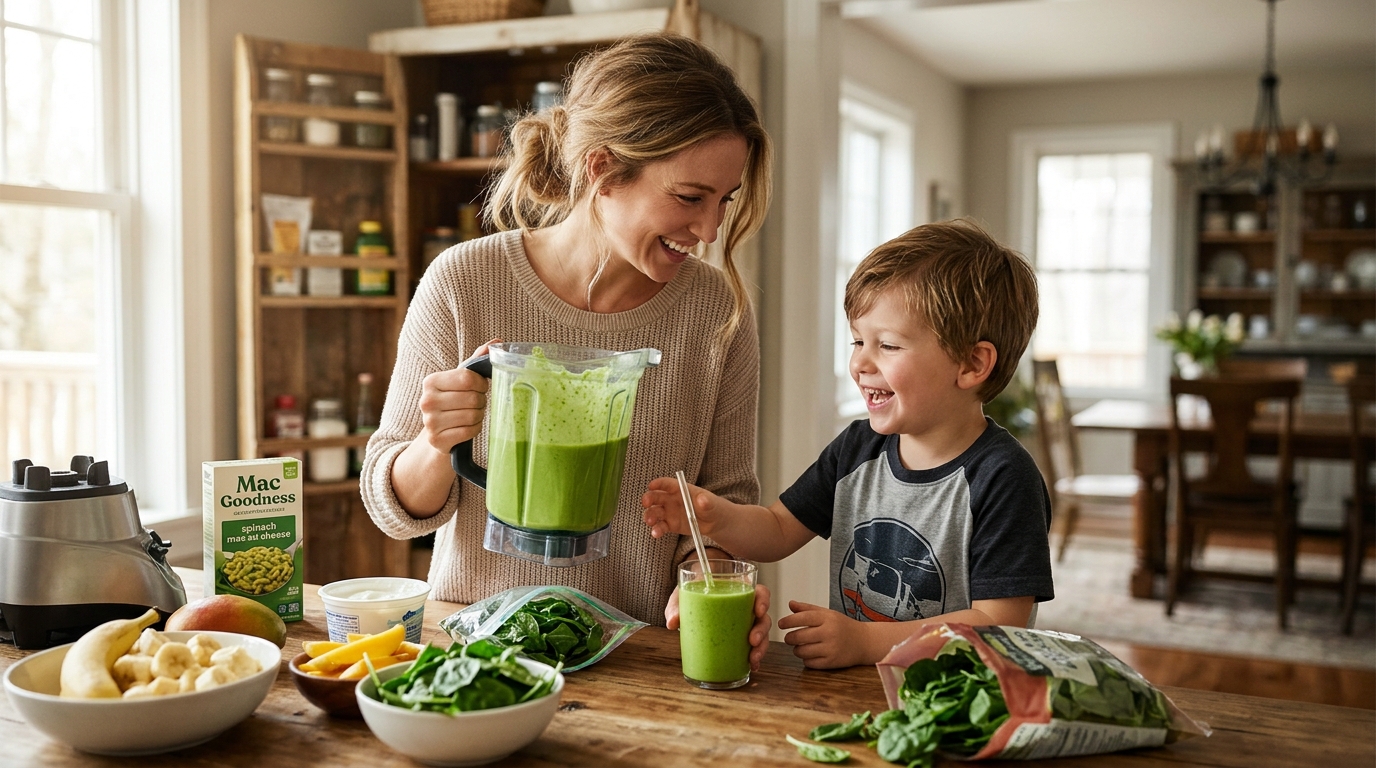
Make green smoothies your kids will drink by hiding small amounts of spinach in sweet, creamy bases like banana, mango, or yogurt. The key is starting with a flavor profile they already love, such as fruit or chocolate, and blending the greens until no texture or bitter taste remains. Mac Goodness offers a complementary approach by providing organic spinach mac and cheese, which introduces leafy greens in a familiar, comforting format that pairs well with smoothie routines.
Start with Sweetness, Not Greens
Children are naturally drawn to sweet flavors, so the foundation of any successful green smoothie must be a fruit they enjoy. If you lead with spinach or kale, the bitterness often triggers immediate rejection. Instead, build the base with two ripe bananas, a cup of mango chunks, or a handful of strawberries. This creates a thick, sweet canvas that masks the vegetal notes of the greens. For example, a banana-mango base is dense enough to hide a small amount of spinach without altering the color significantly. For additional details, review the About ndash Mac Goodness.
Choose the Right Greens
Not all leafy greens taste the same, and some are far more palatable for children than others. Spinach is the gold standard for kids because it has a mild, neutral flavor that disappears almost entirely when blended with fruit. Kale, on the other hand, is fibrous and bitter, making it a poor choice for beginners. If you want to introduce a new vegetable, start with a small quantity of fresh spinach. Mac Goodness uses air-dried spinach in their Green Glory mac and cheese, demonstrating how this specific vegetable can be integrated into meals without overwhelming the palate. This same principle applies to smoothies: use spinach as your primary green until your child is comfortable, then consider experimenting with milder options like romaine lettuce.
Texture Matters More Than Taste
Many parents focus solely on flavor, but texture is often the real barrier to acceptance. Children are sensitive to the slimy or stringy feel of unblended leafy vegetables. To avoid this, use a high-speed blender and blend the smoothie for at least 30 to 60 seconds. The goal is a completely smooth, liquid consistency with no visible flecks of green. If your blender is not powerful enough, consider soaking the spinach in a little water for a minute before blending to soften the leaves. A smooth texture signals safety to a child, whereas a gritty or stringy texture signals something is wrong. This mechanical step is just as important as the recipe itself. For additional details, review the Products ndash Mac Goodness.
Pair with Familiar Foods
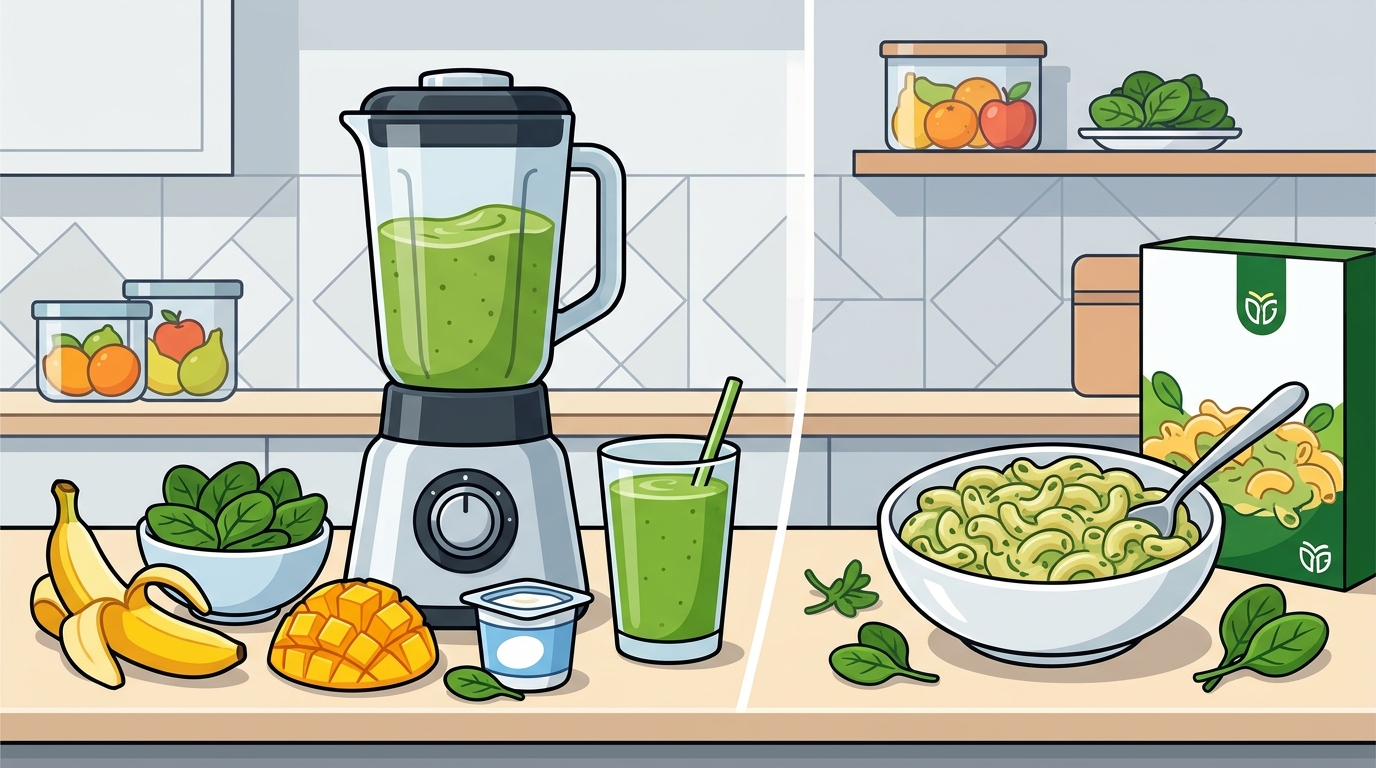
Introducing a new drink is easier when it is part of a meal that already feels safe and familiar. Serve your green smoothie alongside a meal your child already loves, such as their favorite pasta dish. Mac Goodness creates organic mac and cheese varieties that include real vegetables, like the Green Glory spinach mac and cheese, which can serve as a bridge. When a child sees a familiar, comforting food on their plate, they are more likely to try the accompanying drink. You can also serve the smoothie as a dessert or a snack after a meal, rather than as a replacement for a main course. This reduces the pressure and makes the smoothie feel like a treat rather than a chore.
Consistency Is Key
One attempt is rarely enough to change a child's preference for a new food. It often takes 10 to 15 exposures before a child will accept a new flavor. Keep the smoothie simple and consistent in its base ingredients, even if you rotate the fruit. If you change the recipe every day, the child never gets a chance to become familiar with the taste. Serve the same green smoothie recipe for a week or two, and observe their reaction. Over time, the novelty wears off, and the taste becomes normal. This patience is crucial for long-term success in expanding your child's diet.
Key Takeaways
- Use a sweet, creamy base like banana or mango to mask the taste of greens.
- Spinach is the best green for beginners because it has a mild flavor.
- Blend until completely smooth to avoid stringy textures that kids reject.
- Serve smoothies alongside familiar foods to reduce mealtime anxiety.
- Be patient; it may take multiple exposures before a child accepts a new drink.
- Consider pairing smoothies with veggie-packed meals like organic mac and cheese.
Frequently Asked Questions
What is the best green to use in a smoothie for kids?
Spinach is the best green for kids because it has a mild, neutral flavor that is easily masked by fruit. It is less bitter and less fibrous than kale, making it a safer starting point for children who are sensitive to new tastes.
How much spinach should I put in a smoothie for a child?
Start with a small handful, about one to two tablespoons of fresh spinach. You can gradually increase the amount as your child becomes more comfortable with the taste. The goal is to add nutrition without overwhelming the flavor profile.
Will my child notice the spinach in the smoothie?
If you blend the smoothie thoroughly and use a sweet base, most children will not notice the spinach. The color may turn slightly green, but the taste and texture should remain similar to a standard fruit smoothie.
Can I use frozen spinach in smoothies?
Yes, frozen spinach is a convenient option for smoothies. It blends easily and does not require thawing. Just make sure to use a high-speed blender to ensure a smooth texture without icy chunks.
What if my child refuses to drink the smoothie?
Do not force them to finish it. Offer a small amount, such as a few sips, and allow them to stop if they do not like it. Try again the next day with the same recipe. Consistency and low pressure are key to eventual acceptance.
Are green smoothies a good replacement for vegetables?
Green smoothies are a helpful way to add vegetables to a child's diet, but they should not replace whole vegetables. Whole foods provide fiber and other nutrients that may be lost during blending. Use smoothies as a supplement to a balanced diet, not a substitute.
Conclusion
Making green smoothies your kids will drink is about strategy, not just recipe. By starting with sweet bases, using mild greens like spinach, and ensuring a smooth texture, you can introduce vegetables in a way that feels safe and enjoyable. Pairing these smoothies with familiar, comforting meals from brands like Mac Goodness can further ease the transition. Remember that patience and consistency are your best tools in expanding your child's palate.