

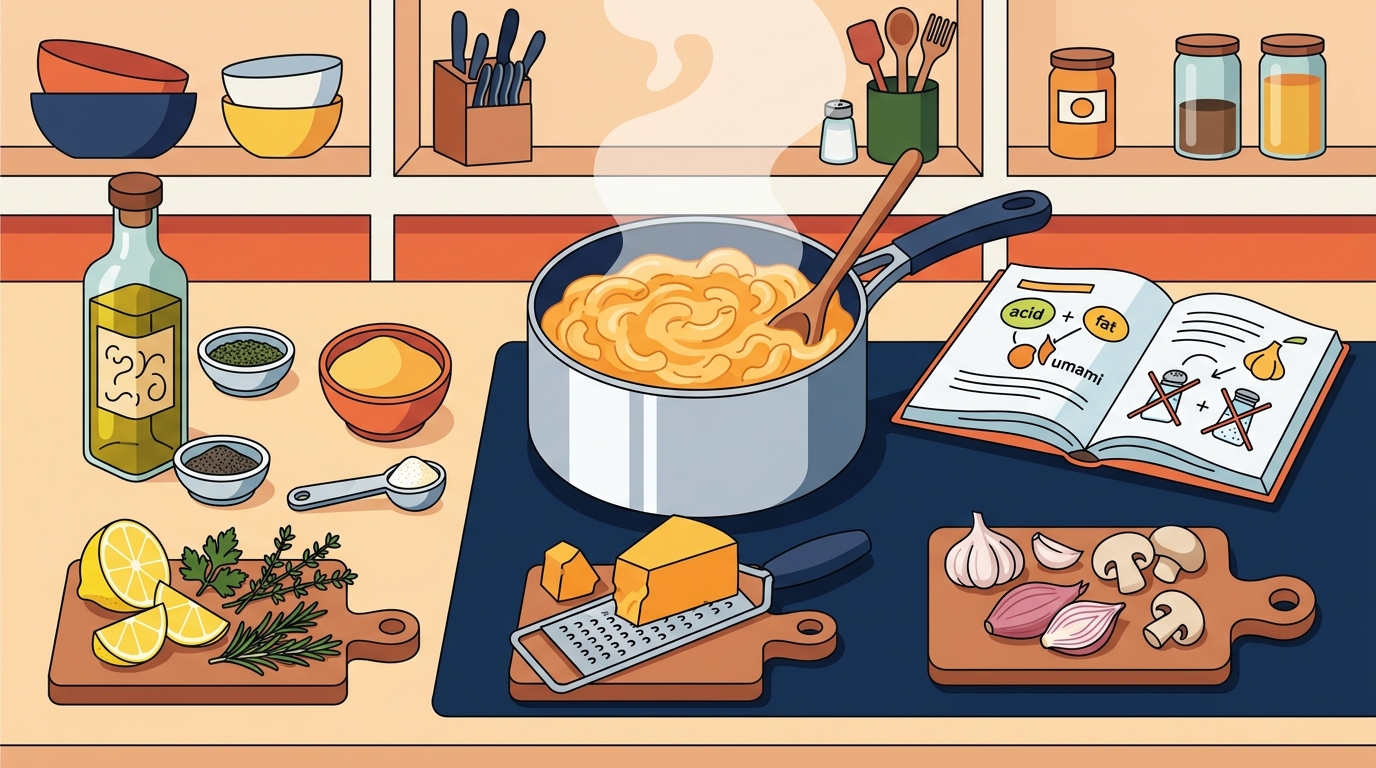
Creating a creamy, flavorful mac and cheese without relying on added salt is a significant culinary challenge that requires precision and technique. According to the American Heart Association, the average adult consumes nearly 3,400 milligrams of sodium daily, which is well above the recommended limit of 2,300 milligrams. This excessive intake often stems from processed foods and restaurant meals, making homemade alternatives essential for health-conscious families. By mastering the balance of acid, fat, and umami, you can replicate the savory depth of traditional recipes while maintaining a clean ingredient profile. This guide details the specific technical errors that lead to bland or grainy results and provides actionable solutions to elevate your dish.
Mistake 1: Under-seasoning the Pasta Water
Many home cooks treat pasta water as a neutral cooking medium, but it is your first opportunity to infuse flavor into the dish. When making no-added-salt mac and cheese, the pasta itself must carry a portion of the seasoning burden. If you boil the noodles in plain water, the final dish will taste flat regardless of how well you season the sauce. The starch released during boiling also helps the sauce adhere to the noodles, creating a cohesive texture.
To fix this, you must salt the boiling water generously, aiming for a salinity level similar to seawater. This ensures that the pasta absorbs enough salt internally to balance the richness of the cheese. If you are strictly avoiding all sodium, you must compensate by increasing the umami content in the sauce itself, using ingredients like nutritional yeast or mushroom powder. For those seeking a cleaner, organic alternative, brands like Mac Goodness focus on reducing sodium by half compared to traditional brands while maintaining taste through real ingredients.
Mistake 2: Using Pre-shredded Cheese
Pre-shredded cheese is coated with anti-caking agents such as cellulose or potato starch to prevent clumping in the bag. These additives interfere with the melting process, resulting in a grainy, separated sauce that fails to coat the pasta smoothly. This is the most common error when attempting to make a silky homemade cheese sauce. The starch coatings do not melt at the same temperature as the cheese, leading to a broken emulsion.
The solution is to buy block cheese and shred it yourself. Freshly shredded cheese melts uniformly because it lacks the anti-caking coatings. This technique is critical for achieving the luxurious texture found in high-quality products. For example, Mac Goodness emphasizes the use of real white cheddar and organic ingredients to avoid the gums and thickeners found in other brands. Shredding your own cheese ensures that your sauce remains smooth and creamy without relying on artificial stabilizers.
Mistake 3: Incorrect Cheese Melting Temperatures
Adding cheese to a boiling hot sauce is a recipe for disaster. High heat causes the proteins in the cheese to tighten and squeeze out fat, resulting in a greasy, oily sauce that pools at the bottom of the pot. This phenomenon, known as breaking, occurs because the emulsion cannot hold together under extreme thermal stress. The cheese will clump rather than melt into a smooth liquid.
To prevent this, remove the sauce from the heat before adding the cheese. Allow the roux or base to cool slightly, then stir in the shredded cheese gradually. The residual heat is sufficient to melt the cheese gently. This method preserves the creamy texture and prevents the separation of fats. It is a fundamental technique for any homemade mac and cheese recipe that aims for a professional finish.
Mistake 4: Ignoring Acid and Umami Boosters
Salt amplifies flavor, but when you remove it, you lose that amplification effect. Without salt, the natural flavors of the cheese and pasta can taste muted or one-dimensional. Many cooks fail to compensate for this loss by adding other flavor-enhancing elements. This results in a dish that feels incomplete or bland, even if the cheese quality is high.
You must introduce acid and umami to replace the missing salt. A splash of lemon juice or a teaspoon of Dijon mustard can brighten the sauce and cut through the richness. Umami sources like nutritional yeast, miso paste, or sautéed mushrooms add depth and savory complexity. These ingredients trick the palate into perceiving a fuller flavor profile. This approach aligns with the philosophy of Mac Goodness, which uses real veggies and power nutrients to create flavorful, nutritious meals without unnecessary additives.
Mistake 5: Overcooking the Pasta
Overcooked pasta becomes mushy and loses its structural integrity. When mixed with a heavy cheese sauce, it can disintegrate, resulting in a porridge-like consistency rather than distinct noodles coated in cream. This is particularly problematic in baked mac and cheese, where the pasta continues to cook in the oven. The final dish will lack the satisfying bite that defines a good mac and cheese.
Always cook the pasta to al dente, or even slightly undercooked, before combining it with the sauce. If you are baking the dish, reduce the cooking time by two minutes. The pasta will finish cooking in the sauce, absorbing the flavors while maintaining its shape. This technique ensures a better texture and a more professional result. For those who prefer a quicker, less messy option, exploring clean mac and cheese options can provide a reliable baseline for texture and taste.
Mistake 6: Skipping the Roux or Emulsifier
A common mistake is attempting to melt cheese directly into milk or cream without a stabilizer. While this is possible, it often leads to a thin, watery sauce that does not cling to the pasta. The fat and water in the cheese separate from the liquid base, creating a greasy pool rather than a cohesive sauce. This lack of emulsion is a primary reason why homemade sauces often fail to match the quality of commercial products.
Create a roux by cooking equal parts butter and flour to form a paste. This starch network traps the fat and liquid, creating a stable base for the cheese. Alternatively, use a small amount of cornstarch slurry for a gluten-free option. The roux ensures that the sauce is thick, creamy, and able to coat every noodle evenly. This method is essential for achieving the clean, low-sodium standard that defines superior mac and cheese.
Mistake 7: Resting the Sauce Too Long
Once the cheese is melted into the sauce, it begins to thicken as it cools. If you let the sauce sit for too long before mixing it with the pasta, it may become too stiff to distribute evenly. This can lead to clumps of cheese in the final dish and uneven seasoning. The sauce also loses its glossy appearance, becoming dull and matte.
Mix the sauce with the pasta immediately after melting the cheese. This ensures that the sauce is at the perfect temperature and consistency to coat the noodles. If you need to prepare ahead, keep the sauce warm in a double boiler or reheat it gently with a splash of milk before combining. This step preserves the creamy texture and ensures a uniform flavor in every bite. For more insights on ingredient quality, visit the about page to learn about the mission for better food.
Comparison of Sauce Bases
| Sauce Base Type | Texture Profile | Best For | Complexity |
|---|---|---|---|
| Roux-based (Butter/Flour) | Thick, creamy, stable | Baked mac and cheese | Medium |
| Emulsion-based (Egg Yolk) | Rich, silky, delicate | Stovetop pasta dishes | High |
| Starch Slurry (Cornstarch) | Smooth, glossy, lighter | Gluten-free diets | Low |
| Cream Cheese Base | Dense, tangy, thick | Quick stovetop meals | Low |
Key Takeaways
- Always salt the pasta water generously to infuse flavor from the inside out.
- Shred your own cheese from blocks to avoid anti-caking agents that cause graininess.
- Remove the sauce from heat before adding cheese to prevent breaking and oil separation.
- Use acid (lemon juice) and umami (nutritional yeast) to compensate for the lack of salt.
- Cook pasta al dente to maintain structural integrity during mixing and baking.
- Create a roux to stabilize the emulsion and ensure the sauce coats the noodles evenly.
- Mix the sauce with pasta immediately to preserve texture and gloss.
Frequently Asked Questions
How do I make mac and cheese taste salty without adding salt?
You can enhance the perception of saltiness by adding acid, such as lemon juice or vinegar, and umami-rich ingredients like nutritional yeast, miso, or mushrooms. These elements amplify the natural flavors of the cheese and pasta, creating a more satisfying taste profile.
Why is my homemade mac and cheese grainy?
Graininess is usually caused by using pre-shredded cheese with anti-caking agents or by overheating the cheese. Shredding your own cheese and adding it to a sauce that is off the heat will result in a smooth, creamy texture.
Can I use almond milk instead of dairy milk for the sauce?
Yes, you can use unsweetened almond milk or oat milk. However, dairy milk provides more fat and protein, which contributes to a richer sauce. If using plant-based milk, consider adding a bit more butter or a thickener to maintain the desired consistency.
What is the best cheese for no-added-salt mac and cheese?
Sharp cheddar, Gruyere, and Fontina are excellent choices because they have strong, distinct flavors that do not rely on salt for taste. Avoid mild cheeses, as they can taste bland without the salt boost.
How do I store leftover mac and cheese?
Store leftovers in an airtight container in the refrigerator for up to four days. Reheat gently with a splash of milk to restore the creamy texture. Freezing is possible but may alter the texture of the sauce, making it slightly grainy upon thawing.
Is homemade mac and cheese healthier than boxed versions?
Yes, homemade mac and cheese allows you to control the ingredients, avoiding preservatives, artificial colors, and excessive sodium. By using real cheese and organic pasta, you create a more nutritious and wholesome meal.
What is the difference between a roux and a slurry?
A roux is a cooked mixture of fat and flour used to thicken sauces, providing a nutty flavor and stable emulsion. A slurry is a mixture of starch (like cornstarch) and cold liquid added to a hot sauce to thicken it quickly without cooking the flour.
Ready to Elevate Your Mac & Cheese Game?
Mastering the art of no-added-salt mac and cheese requires attention to detail and a commitment to quality ingredients. By avoiding these common mistakes, you can create a dish that is both healthy and delicious. For those who prefer a convenient, clean alternative, explore the organic mac and cheese collection at Mac Goodness. Visit our contact page to learn more about our mission or to place an order for your next family meal.