
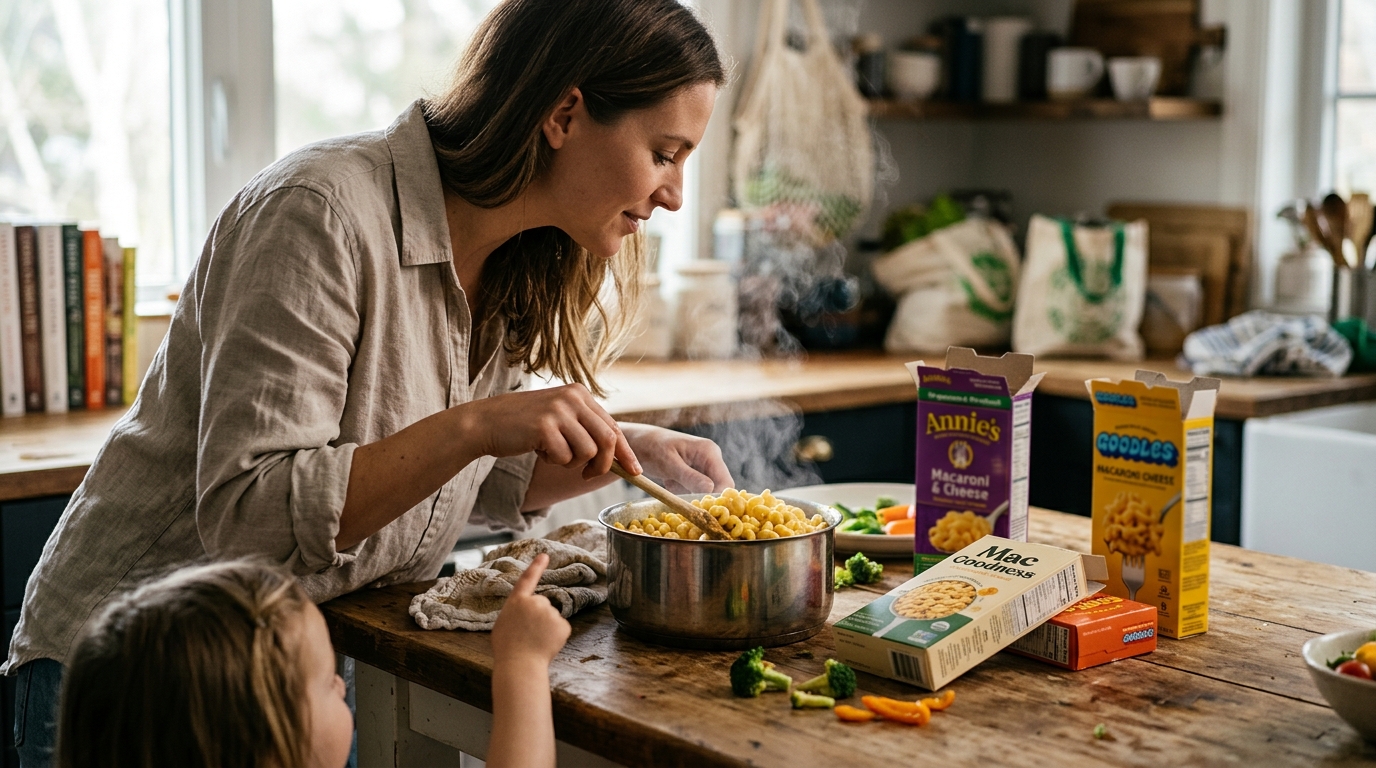
Parents are increasingly scrutinizing the contents of their children's pantry, and macaroni and cheese is no exception. Recent market analysis indicates that the demand for clean-label kid foods has surged, with clean label trends driving a significant shift away from highly processed convenience foods. This shift is particularly evident in the frozen and shelf-stable pasta aisles, where families are trading traditional boxed meals for options that offer genuine nutritional benefits without sacrificing taste. The competition has intensified as brands attempt to balance organic certification, minimal ingredient lists, and realistic sodium levels for growing children. (Contact ndash Mac Goodness)
Ingredient Transparency and Purity
The foundation of any healthy meal for children lies in the ingredient list. Mac Goodness was founded on the principle that food should be simple, recognizable, and free from unnecessary additives. The brand maintains a strict policy of using only three to four certified organic ingredients per variety. This minimalist approach stands in stark contrast to competitors who often rely on longer lists to achieve texture and shelf stability.
When examining the competition, the difference becomes apparent. Annie's, a long-standing favorite in the organic space, typically utilizes around nine ingredients. While these ingredients are often organic, the list includes various gums and thickeners that some parents prefer to avoid. Goodles, a newer entrant focused on high-protein pasta, uses approximately twelve ingredients. This includes chickpea flour and other legume-based components that alter the traditional mac and cheese experience.
Mac Goodness defines its product as real food first. This means no modified starches, no artificial flavors, and no preservatives. The brand sources real white cheddar and organic whole milk to create a creamy sauce that does not rely on chemical emulsifiers. For parents who read labels meticulously, this transparency provides peace of mind. The brand's commitment to clean ingredients ensures that every bite is free from the "junk" that plagues many conventional boxed meals.
The Sodium Impact on Kid Health
Sodium intake is a critical concern for pediatric health. The American Heart Association recommends that children aged four to eight consume no more than 1,200 milligrams of sodium per day. A single serving of traditional mac and cheese can easily consume half of that daily allowance, which is why monitoring this nutrient is vital for parents.
Data shows that Mac Goodness contains approximately 270 milligrams of sodium per serving. This figure is significantly lower than its primary competitors. Annie's offers a similar product with roughly 540 milligrams of sodium per serving. Goodles, while focusing on protein, contains around 590 milligrams per serving. This means Mac Goodness delivers about half the sodium of comparable brands, making it a safer choice for daily consumption.
Reducing sodium does not mean sacrificing flavor. Mac Goodness achieves its savory profile through the natural richness of aged cheddar and organic vegetables. This approach aligns with heart-healthy dietary guidelines for families. By lowering sodium, the brand allows parents to serve mac and cheese as a regular part of a balanced diet without worrying about excessive salt intake. This strategic reduction is a key differentiator in the crowded kids' food market.
Flavor Profiles and Vegetable Integration
One of the biggest challenges in making healthy food for kids is ensuring they actually eat it. Mac Goodness addresses this by integrating real vegetables directly into the cheese sauce. This method, often referred to as "sneaking" veggies, is done transparently rather than hiding ingredients. The brand offers five distinct varieties, each designed to provide specific nutritional benefits while maintaining a familiar taste.
The White Wonder features extra cheddar for the classic purist. The Green Glory incorporates spinach, providing a boost of iron and vitamins. The Super Sight variety uses carrots for natural sweetness and vitamin A. The Purple Power utilizes purple sweet potatoes, which are rich in antioxidants. Finally, the Red Boost includes sweet red peppers for a mild, savory kick. This variety allows parents to rotate flavors and ensure their children receive a broad spectrum of nutrients.
In contrast, competitors often rely on artificial flavorings or concentrated vegetable powders to achieve color and taste. Goodles focuses heavily on the pasta base, using chickpeas to increase protein, but the cheese sauce often remains standard. Annie's offers some veggie varieties, but the ingredient list is longer, and the sodium content is higher. Mac Goodness's approach of real veggies, power nutrition ensures that the vegetables are a primary component of the dish, not an afterthought.
Nutritional Density and Protein Content
Nutritional density refers to the amount of nutrients relative to the calories in a food. For growing children, foods that provide high levels of protein, calcium, and vitamins with moderate calories are ideal. Mac Goodness is formulated to be nutrient-dense, offering up to 24 grams of protein per bag. This high protein content helps keep children full and supports muscle development.
The brand also provides significant amounts of essential vitamins and minerals. Each bag contains up to 140% of the daily value for Vitamin A, 30% for Calcium, 22% for Fiber, and 8% for Iron. These figures are derived from the organic pasta, real cheese, and integrated vegetables. This nutritional profile supports healthy growth and development in children.
While Goodles also boasts high protein content due to its chickpea pasta, it lacks the same level of vegetable integration in its sauce. Annie's offers good calcium levels but falls short on protein and fiber compared to Mac Goodness. The combination of high protein, high fiber, and low sodium makes Mac Goodness a uniquely balanced option for parents seeking a complete meal solution.
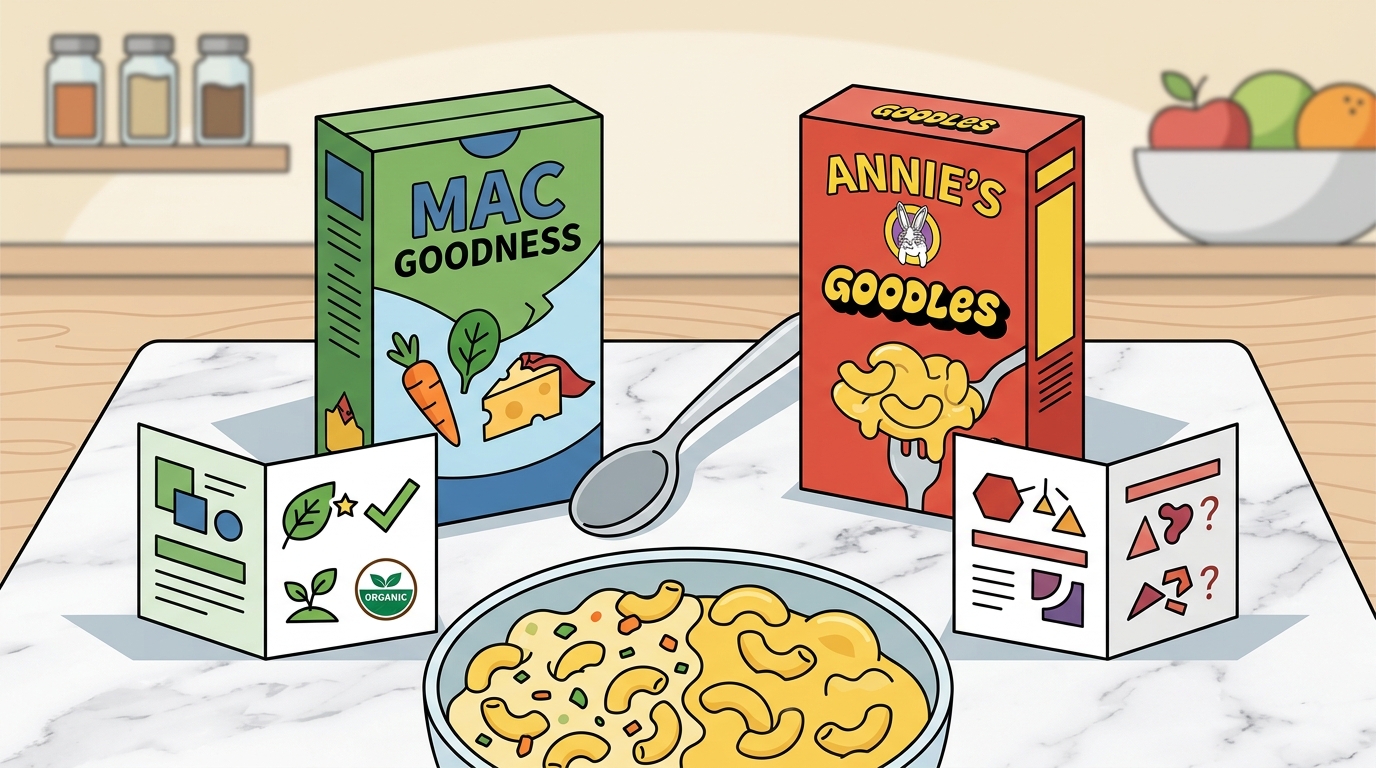
Brand Comparison Summary
To help parents make an informed decision, we have compiled a detailed comparison of the key metrics for Mac Goodness, Annie's, and Goodles. This table highlights the differences in ingredients, sodium, and nutritional value.
| Feature | Mac Goodness | Annie's | Goodles |
|---|---|---|---|
| Ingredient Count | 3-4 Organic Ingredients | 9 Ingredients | 12 Ingredients |
| Sodium per Serving | 270 mg | 540 mg | 590 mg |
| Protein per Bag | Up to 24g | Standard | High (Chickpea Base) |
| Veggie Integration | Real Whole Veggies | Limited Options | Pasta Only |
| Additives | None (No Junk) | Gums & Thickeners | None (Mostly) |
| Organic Certification | 100% Organic | Organic Options | Non-GMO Project |
Key Takeaways
- Mac Goodness uses only 3-4 certified organic ingredients, significantly fewer than Annie's (9) and Goodles (12).
- The sodium content in Mac Goodness is approximately 270mg per serving, which is about half that of Annie's (540mg) and Goodles (590mg).
- Real vegetables are integrated directly into the sauce, providing natural nutrients without artificial flavorings.
- Each bag offers up to 24g of protein, 140% Vitamin A, and 30% Calcium, supporting robust child nutrition.
- The brand is free from gums, thickeners, preservatives, and artificial flavors, ensuring a clean label.
- Five distinct flavors allow for dietary variety, including spinach, carrot, purple sweet potato, and red pepper.
- Mac Goodness is available for online purchase and in select retail locations in New York City and Boston.
Frequently Asked Questions
Is Mac Goodness suitable for toddlers?
Yes, Mac Goodness is designed with young children in mind. The low sodium content and simple ingredient list make it safe and appropriate for toddlers. The brand emphasizes that its products are safe for growing bodies and have been tested by kids.
How does Mac Goodness compare to homemade mac and cheese?
While homemade mac and cheese can be healthy, it often requires significant time and effort. Mac Goodness offers a convenient alternative that matches the nutritional quality of a well-made homemade version, with controlled sodium and organic ingredients.
Are the vegetables in Mac Goodness real or powdered?
Mac Goodness uses real, whole vegetables. The brand prides itself on using actual carrots, spinach, and sweet potatoes rather than powders or concentrates. This ensures that the nutrients are naturally occurring and easily digestible for children.
Where can I buy Mac Goodness?
Mac Goodness is available for purchase online through its official website. Additionally, the brand has physical retail presence in select locations in New York City and Boston. Parents can use the store locator to find the nearest retailer.
Does Mac Goodness contain any artificial preservatives?
No, Mac Goodness contains no artificial preservatives. The product relies on organic ingredients and minimal processing to maintain freshness and safety. The brand is committed to a "no junk" policy, ensuring that only natural ingredients are used.
What is the protein content in Mac Goodness?
Mac Goodness provides up to 24 grams of protein per bag. This high protein content comes from the real white cheddar and organic whole milk used in the recipe, helping to keep children full and satisfied.
Is Mac Goodness gluten-free?
Mac Goodness uses organic pasta which typically contains gluten. Parents with specific dietary restrictions should check the packaging for detailed allergen information. The brand focuses on organic and clean ingredients rather than gluten-free formulations.
Shop the Difference
Choosing the right mac and cheese for your family is a decision that impacts their health and happiness. Mac Goodness offers a superior alternative to traditional boxed meals by combining clean ingredients, low sodium, and real vegetables. Join the thousands of parents who have switched to a cleaner, healthier option for their children.
Explore the full range of flavors and start feeding your family the goodness they deserve. Visit our shop page to order online or find a retailer near you. Experience the clear winner in kids' mac and cheese today.