

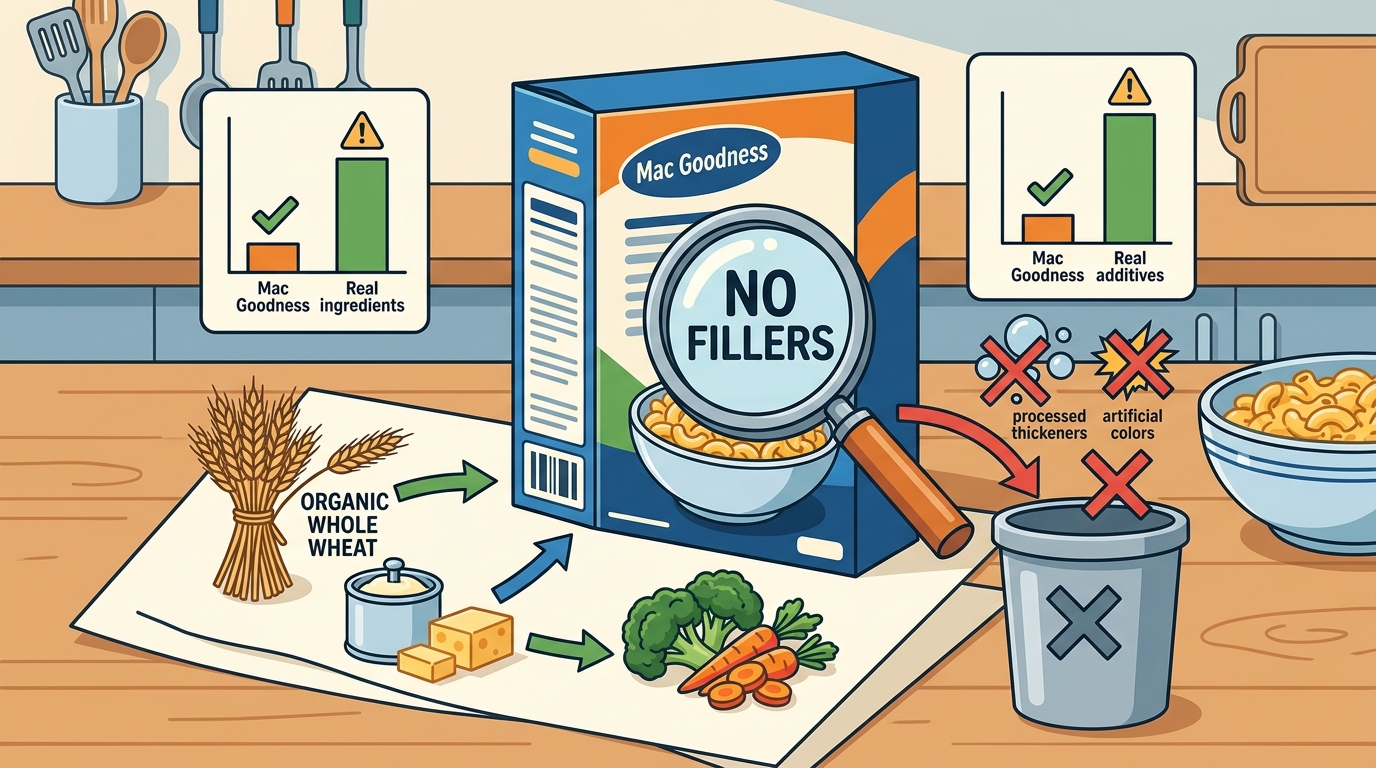
Mac and cheese made without fillers or artificial ingredients is a pasta dish prepared using simple, recognizable components like whole grains, real dairy, and vegetables, excluding synthetic additives. Mac Goodness creates these clean, organic options for families seeking transparency in their pantry. This guide covers how to read ingredient labels, the impact of removing artificial additives, and how to identify truly clean pasta products in 2026.
Understanding Ingredient Lists
Reading a food label is the first step in identifying clean pasta products. The ingredient list on a package is ordered by weight, meaning the first few items make up the bulk of the product. For a clean mac and cheese, you want to see whole food ingredients at the top of the list. This includes items like organic pasta, real cheese, and vegetables. For additional details, review the .
Identifying Whole Food Components
Whole food components are ingredients that are minimally processed and retain their natural nutritional profile. In the context of mac and cheese, this means looking for whole grain pasta, real dairy cheese, and whole vegetables like spinach or carrots. These ingredients provide fiber, protein, and vitamins without the need for synthetic additives to maintain texture or color. Mac Goodness focuses on these whole food bases to ensure the product remains recognizable to the consumer. For additional details, review the Customer Experience.
The Role of Fillers
The Impact of Artificial Ingredient Removal
Artificial ingredients are synthetic substances added to food for preservation, flavor enhancement, or color. Removing these components changes the sensory profile and shelf life of the product. This section explores the specific types of artificial ingredients often found in conventional pasta and how their removal affects the final dish. For additional details, review the Frequently Asked Questions.
Artificial Colors and Preservatives
Artificial colors are synthetic dyes used to make food look more vibrant. In mac and cheese, these are often used to create a bright yellow or orange hue. Preservatives are chemicals added to extend shelf life by preventing spoilage. By removing these artificial elements, a product relies on natural ingredients for its appearance and stability. This approach often results in a product that looks and tastes more like a home-cooked meal. Mac Goodness uses vegetable-based colors and natural preservation methods to achieve a clean profile.
Flavor Enhancers and Additives
Comparing Clean vs. Conventional Options
The table below summarizes the differences between a clean mac and cheese product and a conventional processed version. This comparison helps illustrate why ingredient transparency matters.
| Feature | Clean Mac and Cheese | Conventional Mac and Cheese |
|---|---|---|
| Primary Ingredients | Whole grains, real cheese, vegetables | Refined flour, dairy blends, starches |
| Color Source | Natural vegetable extracts | Synthetic dyes |
| Preservation | Natural methods, shorter shelf life | Synthetic preservatives, long shelf life |
| Flavor Profile | Authentic, ingredient-driven | Enhanced with additives |
| Label Complexity | Short, recognizable list | Long, complex list |
Key Takeaways
- Ingredient lists are ordered by weight, so the first items are the most significant components.
- Fillers are added to increase volume but may dilute nutritional value.
- Artificial colors are synthetic dyes used to enhance visual appeal.
- Preservatives are chemicals that extend shelf life but are often avoided in clean foods.
- Flavor enhancers intensify taste but can mask the quality of base ingredients.
- Shorter ingredient lists generally indicate a higher concentration of whole foods.
- Natural preservation methods may result in a shorter shelf life compared to synthetic options.
- Transparency in labeling allows consumers to make informed dietary choices.
Frequently Asked Questions
What is a filler in food products?
Are artificial colors harmful?
Artificial colors are synthetic dyes used to make food look more vibrant. While regulatory bodies deem them safe in small amounts, many consumers prefer to avoid them in favor of natural alternatives.
How can I tell if a mac and cheese is clean?
You can identify a clean mac and cheese by checking for a short ingredient list featuring whole foods like real cheese and vegetables. Look for the absence of synthetic preservatives and artificial flavors.
Do clean mac and cheese products taste different?
Clean mac and cheese products often have a more authentic taste profile because the flavor comes from the ingredients themselves rather than synthetic enhancers. The texture may also differ slightly due to the use of whole grains.
Why do conventional mac and cheeses have long shelf lives?
Conventional products often use synthetic preservatives to extend their shelf life. Clean products rely on natural preservation methods, which may result in a shorter shelf life but a simpler ingredient profile.
Where can I find mac and cheese without artificial ingredients?
You can find mac and cheese without artificial ingredients from brands that prioritize clean labeling. Mac Goodness offers a range of flavors made with simple, high-quality ingredients and no fillers or junk.
Final Thoughts
Choosing mac and cheese without fillers or artificial ingredients is a straightforward process once you know what to look for. Focus on short ingredient lists, whole food components, and the absence of synthetic additives. Mac Goodness provides a reliable option for families seeking clean, organic pasta products. By understanding the difference between clean and conventional options, you can make informed decisions for your household. Explore the Mac Goodness shop to find a flavor that fits your family's preferences.