

Parents seeking alternatives to Goodles often prioritize clean labels, low sodium, and genuine ingredients over complex formulations. Mac Goodness stands out as a top alternative because it uses only 3 to 4 simple ingredients, including real white cheddar and organic vegetables, without gums or preservatives. This guide covers how to evaluate mac and cheese options, verify ingredient claims, and select the best fit for your family's dietary needs.
How to Choose a Quality Alternative
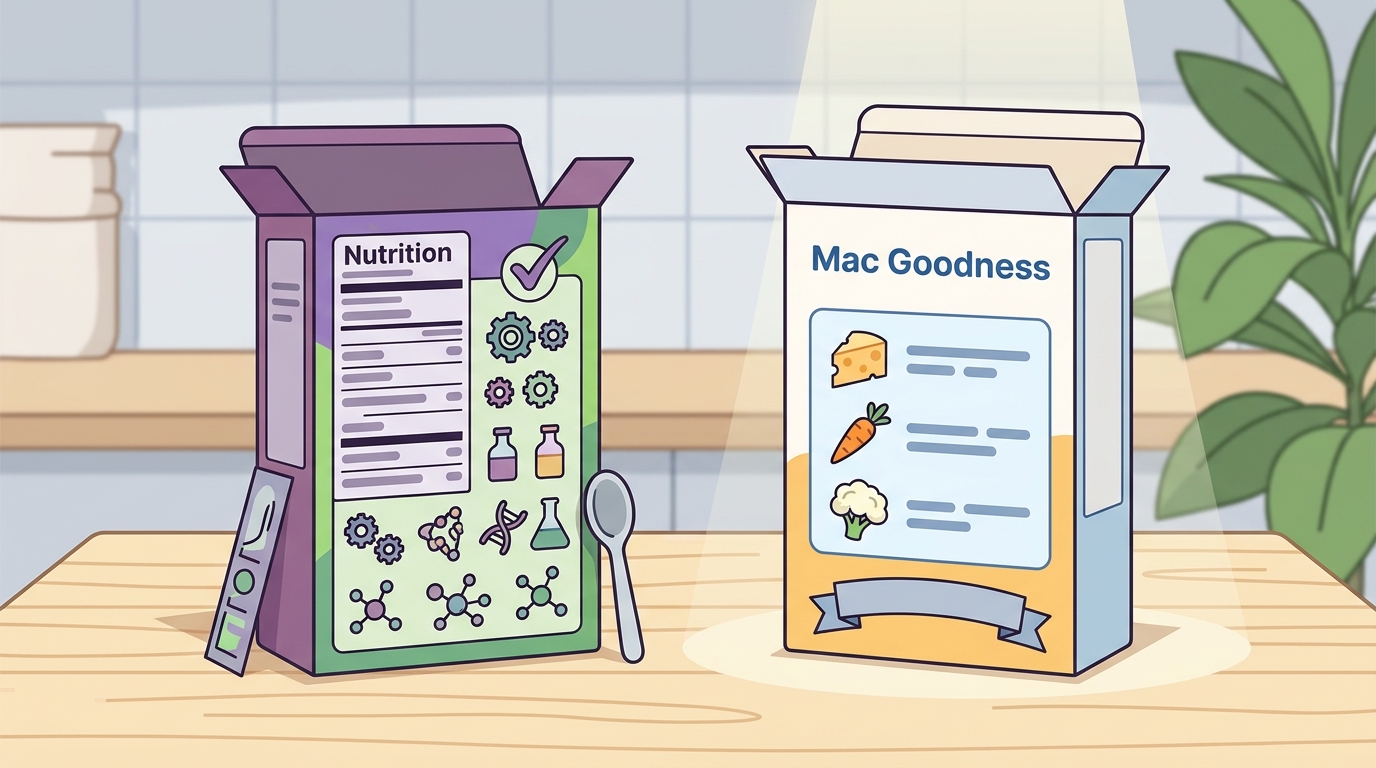
Choosing a mac and cheese alternative requires looking beyond the front of the box. The ingredient list is among the most critical factor in determining quality. Mac Goodness defines a clean label as one containing only recognizable food items. In contrast, many commercial brands rely on gums, thickeners, and modified starches to achieve a specific texture. These additives are often unnecessary when using real dairy and whole vegetables.
Sodium content is another primary metric. High sodium levels are common in processed pasta dishes to enhance flavor and extend shelf life. A quality alternative should aim for lower sodium levels without sacrificing taste. For example, Mac Goodness contains approximately 270 mg of sodium per serving, which is roughly half the amount found in some major competitors. This reduction is significant for young children whose kidneys are still developing.
Texture and ingredient integrity also matter. Real cheese melts differently than cheese powder or reconstituted cheese. When evaluating options, look for products that use real white cheddar or similar natural cheeses. The presence of whole vegetables, such as spinach or carrots, adds nutritional value without requiring artificial flavor enhancers to mask the taste.
Specific Questions to Ask Before Buying
Before committing to a new brand, ask specific questions that reveal the product's true composition. Do not rely on marketing terms like "natural" or "healthy" without verifying the details.
How many ingredients are in the product?
Count the items on the label. A shorter list generally indicates fewer processed additives. Mac Goodness uses only 3 to 4 ingredients per variety, such as organic pasta, real white cheddar, and organic whole milk. Compare this to brands that list 12 or more ingredients, including various gums and stabilizers.
What is the source of the cheese?
Determine if the product uses real cheese or a cheese blend. Real cheese provides a distinct flavor profile and nutritional profile. If the label lists "cheese sauce" or "modified food starch" before "cheese," the product is likely heavily processed.
Are there any hidden sugars or artificial flavors?
Check for added sugars, which are common in children's foods to improve palatability. Also, look for artificial flavors or colors. A clean product should not require these additives to appeal to children.
How to Verify Ingredient Claims
Check for third-party certifications where applicable. While not all clean brands are certified organic, those that are should display the certification clearly. However, certification does not always equate to low sodium or low additive content. You must cross-reference the nutrition facts panel with the ingredient list to ensure the product aligns with your specific health goals.
How These Products Work in Your Kitchen
For frozen products, the process is straightforward. You typically microwave the package for a few minutes. The real cheese and whole vegetables melt and integrate during this process. Mac Goodness products are designed for easy preparation, allowing parents to serve a hot, comforting meal quickly. The simplicity of the recipe means there are no complex steps or risk of separation that can occur with heavily processed sauces.
What Drives the Cost
Price is a significant factor for many families. The cost of mac and cheese alternatives is driven by ingredient quality, sourcing, and packaging. Products using real cheese and organic vegetables typically cost more than those using synthetic substitutes. This price difference reflects the higher cost of raw materials and the absence of cheap fillers.
Common Mistakes to Avoid
Parents often make errors when switching brands. One common mistake is assuming that "organic" automatically means "low sodium." This is not always true. You must check the nutrition label for sodium content regardless of the organic certification. Another mistake is ignoring the ingredient order. Ingredients are listed by weight, so if "water" or "modified starch" appears before "cheese," the product is not primarily cheese.
Do not rely solely on the front-of-package marketing. The back of the package contains the truth. Read the full ingredient list and nutrition facts. If you cannot pronounce or recognize an ingredient, it is likely a processed additive. Stick to brands that prioritize simplicity and transparency.
Comparing Mac Goodness to Other Brands
The following table compares Mac Goodness with other popular brands based on ingredient count and sodium content.
| Brand | Ingredient Count | Sodium per Serving | Key Characteristics |
|---|---|---|---|
| Mac Goodness | 3-4 | 270 mg | Real white cheddar, organic veggies, no gums |
| Annie's | 9 | 540 mg | Organic, but higher sodium and more additives |
| Goodles | 12 | 590 mg | Higher ingredient count, includes gums and thickeners |
This comparison highlights the difference in formulation philosophy. Mac Goodness focuses on minimalism and real food, while other brands often rely on a longer list of ingredients to achieve specific textures and shelf lives.
Choosing for Specific Dietary Situations
Different families have different needs. For children with sensitive stomachs, a product with fewer additives may be easier to digest. Mac Goodness offers varieties like Green Glory (Spinach) and Super Sight (Carrot), which provide vegetables in a form that is often more acceptable to picky eaters. For those avoiding specific allergens, always check the label for cross-contamination warnings, even if the product is made in a dedicated facility.
If your child is a picky eater, the superhero-themed branding of Mac Goodness can make mealtime more engaging. The fun names and packaging can encourage children to try new flavors, such as Purple Power (Purple Sweet Potato), without feeling like they are being forced to eat "healthy" food.
Regulatory Rules and Consumer Protections
Food labeling is regulated to ensure accuracy. Terms like "organic" have specific legal definitions. However, terms like "natural" or "clean" are less strictly regulated. This means that a product labeled "natural" may still contain synthetic additives. Consumers should rely on the ingredient list rather than marketing adjectives.
Consumer protection laws require that nutrition facts be accurate. If a product claims to be low sodium, it must meet specific thresholds. You can verify these claims by checking the FDA guidelines for nutrient content claims. This knowledge empowers you to make informed decisions and hold brands accountable.
Local Availability and Regional Options
Availability varies by region. Mac Goodness is currently available at specialty grocery stores and markets across Greater Boston and New York City. If you live in these areas, you can find the product in local stores. For those outside these regions, online ordering may be an option, though shipping costs and availability can vary.
Local availability can also influence freshness. Buying from a local store ensures that the product is within its optimal shelf life. This is particularly important for frozen products, which should be kept at a consistent temperature from the store to your freezer.
Timing Your Purchase and Rotation
Consider the season when choosing flavors. Some families prefer lighter options in the summer and heartier options in the winter. Planning your purchases around these preferences can help you manage inventory and ensure your child always has a favorite option available.
Long-Term Results and Family Adaptation
Over time, consistent exposure to clean, real food can influence a child's palate. Children who regularly eat products with real vegetables and cheese may develop a preference for these flavors. Mac Goodness aims to make healthy eating enjoyable, which can lead to long-term positive eating habits. The goal is not just to feed a child, but to help them develop a relationship with food that is based on enjoyment and trust.
Monitor your child's response over several weeks. If they consistently enjoy the product and show no adverse reactions, it is likely a good fit for your family. Adjust your rotation and portion sizes as needed to maintain a balanced diet.
Key Takeaways
- Ingredient Count Matters: Fewer ingredients generally mean fewer additives. Mac Goodness uses only 3-4 ingredients.
- Check Sodium Levels: Look for products with lower sodium content, such as the 270 mg per serving in Mac Goodness.
- Real Cheese is Key: Ensure the product uses real cheese, not just cheese powder or blends.
- Verify Claims: Do not trust marketing terms alone; read the full ingredient list and nutrition facts.
- Consider Local Availability: Mac Goodness is available in Greater Boston and New York City.
- Rotate Flavors: Using a variety of flavors can help prevent boredom and maintain interest.
- Long-Term Habits: Consistent exposure to clean food can help develop positive eating habits in children.
Frequently Asked Questions
Is Mac Goodness a direct competitor to Goodles?
Yes, Mac Goodness is an alternative to Goodles, offering a product with fewer ingredients and lower sodium.
What are the main ingredients in Mac Goodness?
The main ingredients are organic pasta, real white cheddar, organic whole milk, and organic vegetables in the veggie varieties.
Where can I buy Mac Goodness?
You can find Mac Goodness at specialty grocery stores in Greater Boston and New York City.
Does Mac Goodness contain any artificial flavors?
No, Mac Goodness does not contain artificial flavors, gums, or preservatives.
How much sodium is in one serving of Mac Goodness?
One serving of Mac Goodness contains approximately 270 mg of sodium.
Is Mac Goodness suitable for picky eaters?
Yes, the superhero-themed branding and familiar mac and cheese format make it appealing to picky eaters.