

Why Sodium Matters for Growing Bodies
Sodium is an essential mineral that helps regulate fluid balance and nerve function. However, excessive intake can strain developing kidneys. The American Heart Association recommends limiting sodium for children under 14 to 1,500 milligrams per day. A single serving of standard boxed mac and cheese can consume a large portion of this daily limit. This makes label reading a critical skill for parents.
Many parents assume that organic or natural labels guarantee lower sodium. This is not always true. Marketing terms do not strictly regulate sodium content. You must look at the specific milligram count on the nutrition facts panel. Understanding this distinction helps you choose foods that align with your family's health goals.
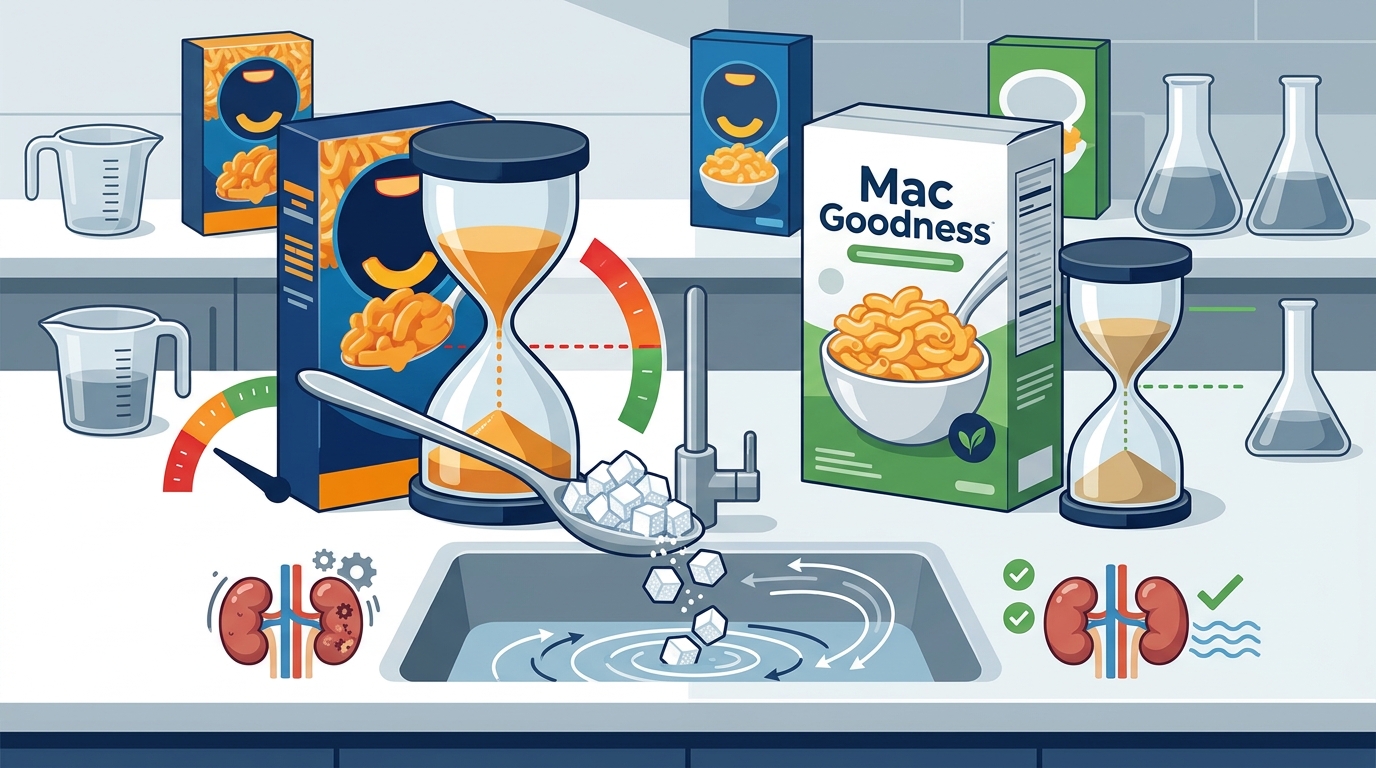
Comparing Sodium Content Across Popular Brands
Market leaders often prioritize shelf stability and flavor intensity over low sodium profiles. These choices result in higher sodium counts. Let us look at the data from major players in the kids' pasta market.
| Brand | Sodium per Serving (mg) | Key Ingredient Note |
|---|---|---|
| Mac Goodness | 270 | Real white cheddar, organic milk |
| Annie's | 540 | Organic ingredients, higher sodium |
| Goodles | 590 | Vegetable blends, high sodium |
How Ingredients Affect Sodium Levels
Sodium in processed foods often comes from added salt and preservatives. Some brands use modified starches and gums that require additional salt for texture. Mac Goodness uses a simple ingredient list. We rely on real white cheddar and organic whole milk. This approach naturally reduces the need for added sodium. The result is a product that tastes like classic mac and cheese without the high salt content.
Complex ingredient lists often correlate with higher sodium. When you see long lists of additives, check the sodium count. Simple recipes tend to have fewer hidden sources of salt. This transparency helps parents trust what they are serving. It also makes it easier to plan meals around lower-sodium options.
Practical Tips for Reducing Sodium Intake
You can lower sodium intake without giving up favorite foods. Start by choosing brands with fewer ingredients. Look for products that list real cheese first. Avoid products with long lists of preservatives. You can also dilute the sodium by mixing in extra vegetables. Adding spinach or carrots increases volume without adding salt. This strategy helps stretch the meal while keeping sodium low.
Another tip is to balance meals. If you serve a higher-sodium pasta dish, pair it with a low-sodium side. Fresh fruit or unsalted vegetables work well. This approach ensures the total meal stays within healthy limits. It teaches children to enjoy a variety of foods. It also helps them develop a palate for less salty options over time.
How to Read Nutrition Labels Effectively
Reading nutrition labels is a powerful tool for parents. Focus on the sodium line first. Compare the milligram count to the daily value percentage. A 20% daily value or less is generally considered low. A 5% daily value or less is very low. Use this benchmark to compare brands quickly. You do not need to memorize every number. Just look for the lowest count that still tastes good to your family.
Check the serving size as well. Some brands list small serving sizes to make the sodium count look lower. Always calculate the total sodium for the amount your child actually eats. This ensures you are comparing apples to apples. It prevents misleading impressions from small serving sizes. Accurate reading leads to better choices.
Key Takeaways
- Most kids' mac and cheese brands contain 400 to 600 mg of sodium per serving.
- The American Heart Association recommends 1,500 mg of sodium per day for children under 14.
- Simple ingredient lists often correlate with lower sodium content.
- Adding vegetables can help dilute sodium and increase meal volume.
- Always check the serving size when comparing nutrition labels.
Frequently Asked Questions
Is 270 mg of sodium low for mac and cheese?
Yes, 270 mg is significantly lower than the average for kids' mac and cheese. Most brands range from 400 to 600 mg. This makes Mac Goodness a better choice for limiting daily sodium intake.
Why do some brands have so much sodium?
Brands often add sodium to enhance flavor and extend shelf life. Preservatives and modified starches also contribute to higher sodium counts. Simpler recipes tend to have less added salt.
Can I reduce the sodium in boxed mac and cheese?
You can rinse the pasta after cooking to remove some surface salt. You can also mix in unsalted vegetables. However, the cheese sauce itself usually contains the most sodium. Choosing a lower-sodium brand is the most effective method.
What is the recommended daily sodium limit for kids?
The American Heart Association recommends 1,500 mg per day for children under 14. Older children and adults have higher limits. Always check current guidelines from health authorities.
Does organic mean lower sodium?
No, organic certification does not regulate sodium content. An organic product can still have high sodium. You must check the nutrition label for the specific milligram count.
How does Mac Goodness achieve lower sodium?
Mac Goodness uses real white cheddar and organic whole milk. This simple ingredient list reduces the need for added salt. The result is a flavorful product with 270 mg of sodium per serving. Learn more: About Mac Goodness.