
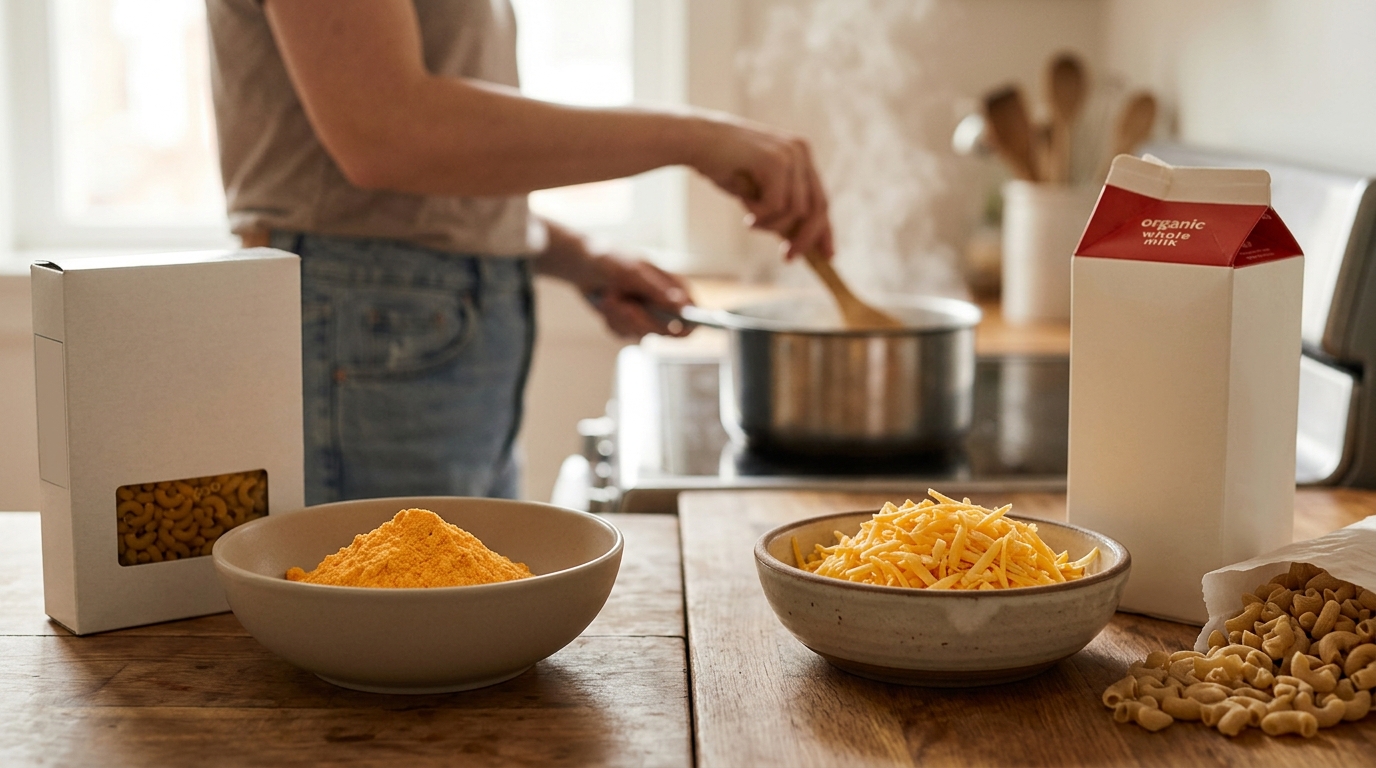
Protein content in mac and cheese varies significantly based on the primary cheese source and pasta type. Store-bought versions often rely on processed cheese blends that may dilute protein density, while homemade recipes using real cheddar and whole milk typically offer higher protein per serving. Understanding these differences helps parents make informed choices for their family's nutrition. For additional details, review the Super Mac & Cheese lineup.
The Role of Cheese in Protein Density
Protein is a macronutrient essential for growth and repair. In mac and cheese, the primary source of protein is the cheese. Real white cheddar, for instance, is a complete protein source containing all nine essential amino acids. When you use real cheese at home, you control the protein density directly. Store-bought options often use cheese blends that include fillers, gums, and modified starches. These additives can lower the overall protein percentage per serving. Mac Goodness uses real white cheddar in its recipes to ensure a high-quality protein profile without unnecessary fillers.
Pasta Selection and Its Impact
Pasta contributes a secondary source of protein, primarily from gluten. Durum wheat semolina pasta, often used in higher-quality products, has a naturally higher protein structure than many standard pastas. It is also a source of iron and B vitamins. When making mac and cheese at home, choosing a high-quality durum wheat pasta can boost the total protein count. Store-bought varieties may use lower-grade wheat or add extra starches to improve texture, which can slightly reduce the protein-to-carb ratio. The choice of pasta is a subtle but important factor in the final nutritional profile.
The Effect of Milk and Dairy Additives
Comparing Homemade and Store-Bought Profiles
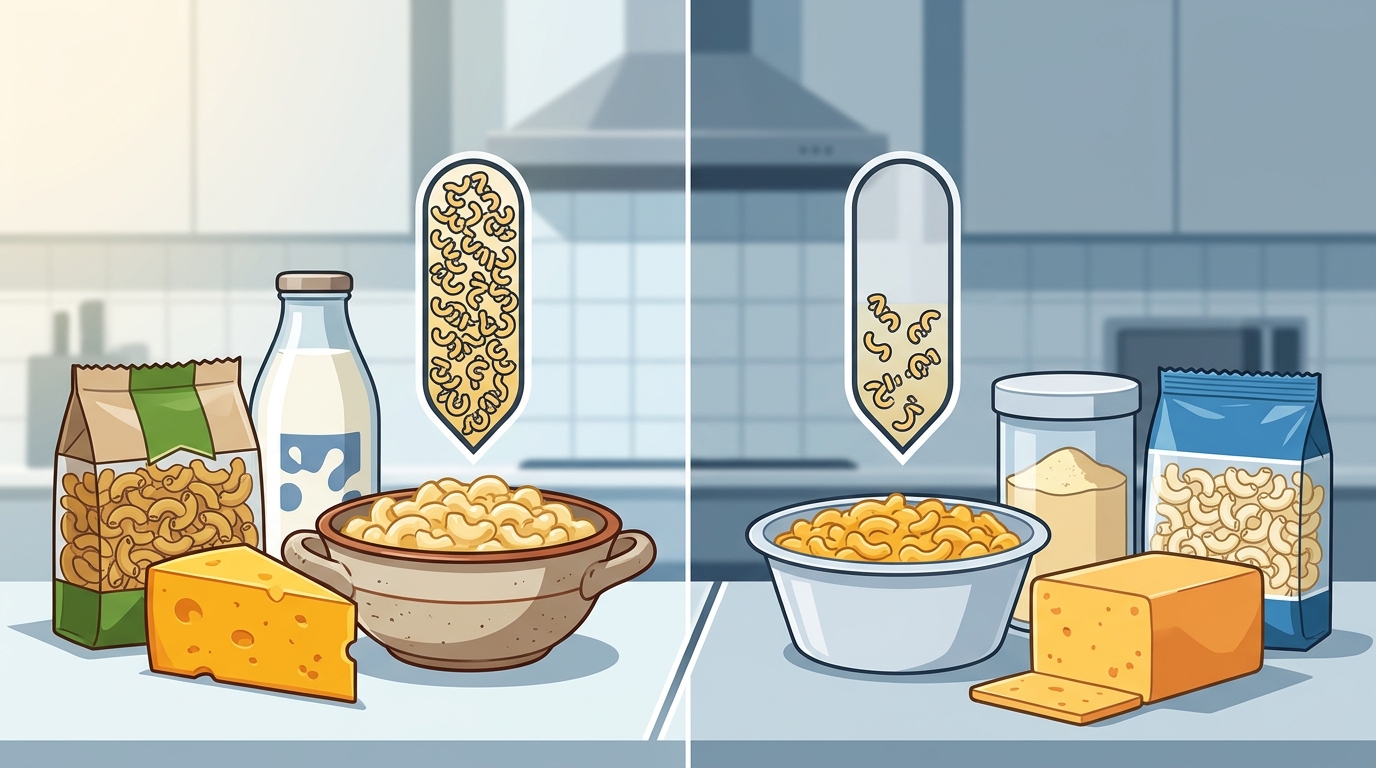
When comparing a standard homemade recipe with a typical store-bought box, the protein difference can be notable. A homemade batch using real cheddar and whole milk often yields around 15 to 20 grams of protein per serving. Store-bought versions may range from 10 to 15 grams, depending on the brand and formulation. The difference comes from the ratio of real cheese to fillers. Brands that prioritize simple ingredients, like Mac Goodness, aim to provide a cleaner profile with fewer additives, which can result in a more predictable and higher-quality protein source.
Why Ingredient Quality Matters for Families
For parents, the goal is often to provide comfort food that also supports healthy growth. Protein is crucial for this, but the quality of that protein matters. Real cheese and whole milk provide bioavailable protein that is easily digested. Fillers and artificial ingredients in some store-bought options may not contribute to nutritional value. By choosing products with simple, recognizable ingredients, families can ensure they are getting the most out of each serving. Mac Goodness focuses on this approach, using simple ingredients to create a meal that is both tasty and nutritious.
Key Takeaways
- Real cheese is the primary driver of protein content in mac and cheese.
- Durum wheat pasta offers a higher protein structure than standard pastas.
- Whole milk adds significant protein and creaminess without fillers.
- Store-bought blends may have lower protein density due to added starches.
- Homemade recipes allow for precise control over protein sources.
- Simple ingredient lists often correlate with higher quality protein profiles.
Frequently Asked Questions
Does homemade mac and cheese always have more protein?
Not always, but it often does. The protein content depends on the specific ingredients used. If you use a high-protein cheese and whole milk, homemade versions typically outperform store-bought blends that contain more fillers.
What type of cheese has the most protein?
Hard cheeses like cheddar and parmesan generally have the highest protein content per ounce. Soft cheeses may have slightly less protein but still contribute significantly to the total count.
How does pasta affect the protein count?
Pasta provides a secondary source of protein. Durum wheat semolina pasta is denser in protein than many other types, adding a meaningful amount to the overall meal.
Are store-bought mac and cheeses low in protein?
They are not necessarily low, but the protein density can be lower due to the inclusion of non-dairy fillers and modified starches. The ratio of real cheese to additives is the key factor.
Why does Mac Goodness use whole milk?
Whole milk provides naturally occurring healthy fats, calcium, and complete dairy protein. It helps create a smooth texture without the need for artificial gums or thickeners.
Can I boost the protein in store-bought mac and cheese?
Yes, you can add extra cheese or a side of protein like chicken or beans. However, starting with a product that has a cleaner ingredient list is often a simpler approach.
Conclusion
Understanding the protein content in mac and cheese helps parents make better choices for their families. Whether you cook at home or buy from the store, focusing on real ingredients like cheese, whole milk, and quality pasta ensures a more nutritious meal. Mac Goodness is designed with this philosophy in mind, offering a simple option for families. To explore our range of veggie-powered flavors, visit our shop. Learn more: About Mac Goodness.