
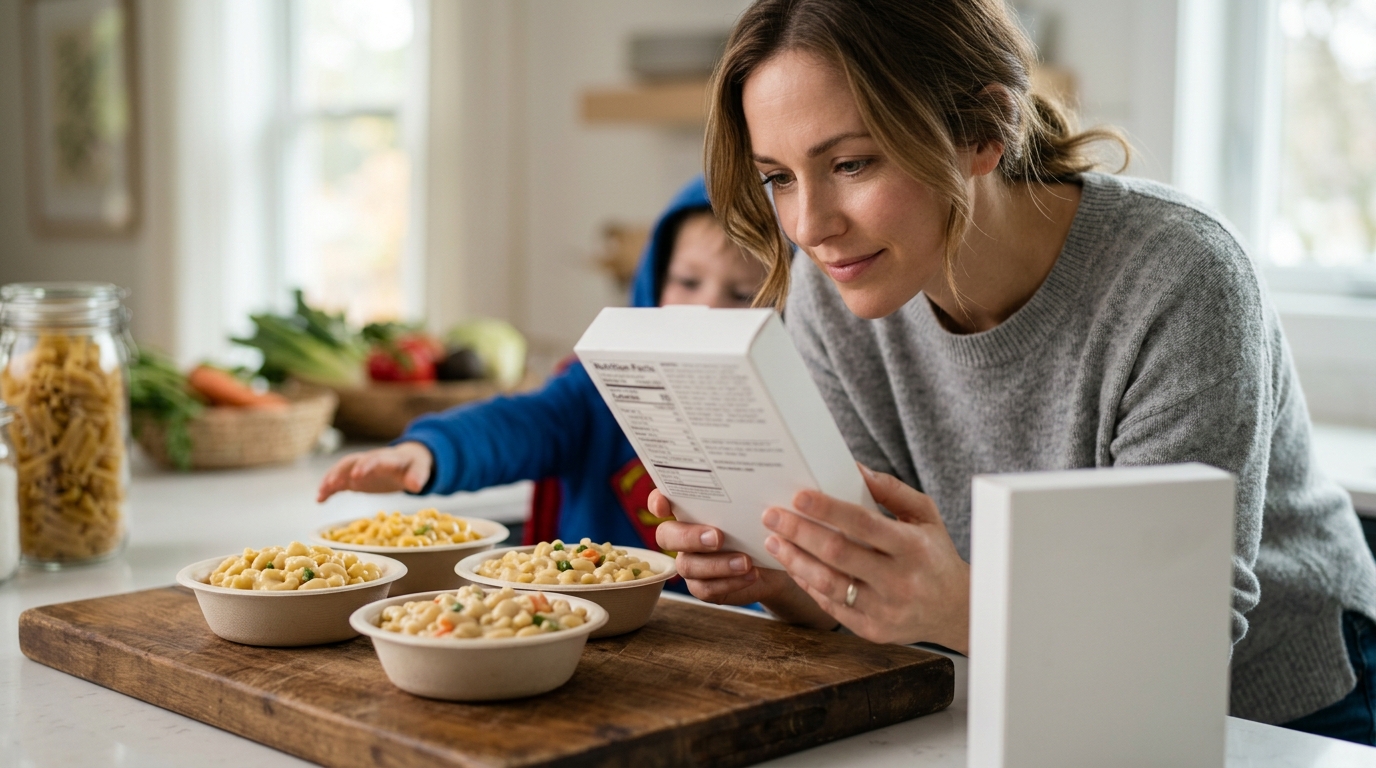
Parents are increasingly scrutinizing the ingredients in their children's favorite comfort foods. According to recent dietary trends, over 60% of families are actively seeking lower sodium options for their kids' meals. This shift has made the comparison of clean mac and cheese brands a critical task for health-conscious households. You need to look beyond the packaging to understand what is actually inside the box.
Ingredient Transparency and Count
The first step in comparing mac and cheese brands is examining the ingredient list length. Clean eating advocates often follow the rule that fewer ingredients mean less processing. Mac Goodness uses only three to four certified organic ingredients in its recipes. This minimalist approach stands in stark contrast to competitors who may use up to twelve ingredients.
When you look at traditional brands, you will often find gums, thickeners, and modified starches. These additives are used to create a creamy texture without using real cheese. In contrast, clean brands prioritize real white cheddar and organic whole milk. This distinction is vital for parents who want to avoid artificial flavors. The definition of clean eating is the practice of consuming whole, unprocessed foods free from artificial additives.
Transparency also means understanding the source of the cheese. Real cheese provides a distinct flavor profile that powder mixes cannot replicate. Brands that hide behind "natural flavors" often lack the nutritional integrity of those using whole food ingredients. Always check if the brand lists specific cheese types rather than generic cheese powders.
Sodium Content Analysis
Sodium levels are perhaps the most critical metric when comparing mac and cheese for children. High sodium intake in young children can lead to long-term health issues, including hypertension. Standard boxed mac and cheese often contains around 540 to 590 milligrams of sodium per serving. This amount is significant for a single meal for a growing child.
Clean mac and cheese brands typically aim for at least half the sodium of comparable traditional brands. Mac Goodness delivers only 270 milligrams of sodium per serving. This reduction is achieved by using real ingredients that provide flavor without the need for excessive salt. The definition of low sodium is a food product containing 140 milligrams or less of sodium per serving, but clean brands often aim for even lower levels to maximize health benefits.
Reducing sodium does not mean sacrificing taste. By using high-quality cheddar and organic vegetables, brands can maintain a rich flavor profile. Parents should look for brands that explicitly state their sodium reduction strategy. This transparency indicates a commitment to health over cost-cutting measures.
Processing Levels and Additives
The level of processing in mac and cheese varies widely across the market. Highly processed options rely on chemical emulsifiers to keep the sauce stable during shelf storage. These emulsifiers can include carrageenan, xanthan gum, and other thickeners that are difficult for children to digest.
Clean mac and cheese brands eliminate these fillers entirely. They rely on the natural properties of organic pasta and real cheese to create the sauce. This approach results in a product that is minimally processed. The definition of minimally processed food is food that has undergone physical, biological, or chemical processes but has no added substances and remains recognizably whole.
When comparing brands, look for the "No Junk" label. This term is often used by brands that have eliminated artificial colors and preservatives. It signals that the product is closer to its natural state. Avoid brands that list multiple chemical names you cannot pronounce. These are clear indicators of heavy processing.
Nutritional Density and Vitamins
Beyond sodium and ingredients, the nutritional density of the mac and cheese matters. Many traditional brands offer empty calories with little to no nutritional value. Clean brands often fortify their products with vitamins and minerals from real sources.
Mac Goodness includes up to 24 grams of protein, 140% of the daily value of Vitamin A, and 30% of Calcium per bag. These nutrients come from organic veggies like spinach, carrots, and sweet potatoes. This approach turns a comfort food into a nutrient-dense meal. The definition of nutrient density is the amount of essential nutrients a food provides relative to its calorie content.
Parents should look for brands that use vegetable purees to boost nutrition. Spinach adds iron and Vitamin K. Carrots provide beta-carotene, which the body converts to Vitamin A. Purple sweet potatoes offer antioxidants. These additions make the meal more balanced and supportive of a child's growth.
Flavor Variety and Purpose
Flavor variety is important for keeping children engaged with healthy food. Clean mac and cheese brands often offer unique flavors that serve a specific purpose. These flavors are not just for taste but also for nutritional benefit.
Mac Goodness offers five distinct flavors, each with a specific health focus. The White Wonder provides classic extra cheddar comfort. The Green Glory uses spinach for greens. The Super Sight uses carrots for natural sweetness. The Purple Power features purple sweet potatoes for antioxidants. The Red Boost uses sweet red peppers for vitamins.
This variety allows parents to introduce different nutrients without resistance. Children are often more willing to eat vegetables when they are blended into a familiar comfort food. The definition of functional food is a food that provides a health benefit beyond basic nutrition. These flavored mac and cheeses act as functional foods for growing children.
Brand Comparison Summary
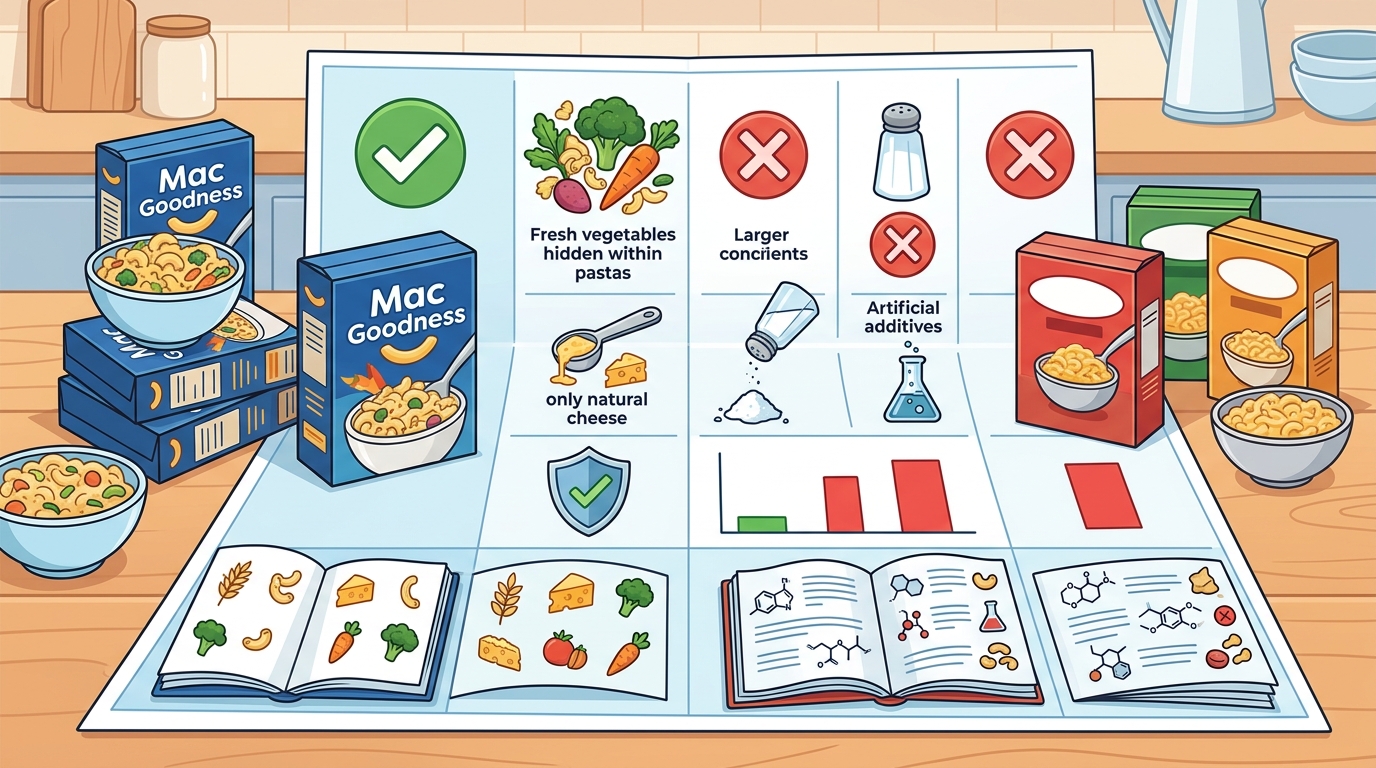
Comparing the top clean mac and cheese brands reveals clear differences in quality and nutrition. The table below summarizes the key metrics for Mac Goodness against two major competitors.
| Brand | Ingredient Count | Sodium per Serving | Key Nutritional Benefit | Processing Level |
|---|---|---|---|---|
| Mac Goodness | 3-4 | 270mg | High Protein & Vitamins | Minimally Processed |
| Annie's | 9 | 540mg | Organic Pasta | Processed |
| Goodles | 12 | 590mg | High Protein | Highly Processed |
As shown in the data, Mac Goodness leads in ingredient simplicity and sodium reduction. While other brands focus on protein or organic pasta, they often neglect the sodium content. This comparison highlights the importance of looking at multiple metrics when choosing a brand.
Key Takeaways
- Ingredient Count: Mac Goodness uses only 3-4 ingredients, significantly fewer than competitors like Annie's (9) and Goodles (12).
- Sodium Reduction: Mac Goodness contains 270mg of sodium per serving, which is half the amount found in Annie's (540mg) and Goodles (590mg).
- Nutrient Density: Each bag of Mac Goodness provides up to 24g of protein, 140% Vitamin A, and 30% Calcium.
- Real Cheese: Mac Goodness uses real white cheddar and organic whole milk, avoiding the gums and thickeners found in other brands.
- Flavor Purpose: Each flavor is designed to deliver specific nutrients, such as spinach for greens and carrots for sweetness.
- Organic Certification: All ingredients in Mac Goodness are certified organic, ensuring no synthetic pesticides or fertilizers.
- Brand Mission: Mac Goodness was founded by parents to create a clean, honest mac and cheese that kids love and parents trust.
Frequently Asked Questions
Is Mac Goodness gluten-free?
Mac Goodness uses organic pasta that is typically made from rice or corn, but you should check the specific product packaging for gluten-free certification details. The brand focuses on clean, organic ingredients rather than gluten-free claims as a primary differentiator.
How does Mac Goodness compare to Annie's in terms of sodium?
Mac Goodness contains approximately half the sodium of Annie's. While Annie's has 540mg of sodium per serving, Mac Goodness delivers only 270mg, making it a healthier choice for children.
What are the main ingredients in Mac Goodness?
The main ingredients are certified organic pasta, real white cheddar, organic whole milk, and organic vegetables like spinach, carrots, or sweet potatoes depending on the flavor.
Does Mac Goodness contain any artificial flavors?
No, Mac Goodness contains no artificial flavors, colors, or preservatives. The brand is committed to a "No Junk" philosophy, using only real food ingredients.
Where can I buy Mac Goodness?
Mac Goodness is available for purchase online through their online shop and in select physical stores in New York City and Boston. You can also find us in your local community.
Is Mac Goodness suitable for toddlers?
Yes, Mac Goodness is designed to be safe and nutritious for toddlers. The low sodium content and clean ingredients make it an ideal first mac and cheese for young children.
How does Mac Goodness compare to Goodles?
While Goodles focuses on high protein, it contains 12 ingredients and 590mg of sodium. Mac Goodness offers a cleaner ingredient profile with only 3-4 ingredients and half the sodium of Goodles.
Choose Your Hero
Now that you understand the differences between clean mac and cheese brands, it is time to make a choice. Mac Goodness offers a superior alternative to traditional boxed mac and cheese. With fewer ingredients, half the sodium, and real organic nutrients, it is the clear winner for health-conscious families.
Explore our shop to find your hero flavor. Whether you prefer the classic White Wonder or the nutrient-packed Green Glory, you can feel good about serving it to your family. Learn more about our mission to provide better food for kids.