

Parents spend an average of $1,500 annually on family groceries, with processed convenience foods claiming a significant portion of that budget. According to USDA economic research, the shift toward organic and clean-label ingredients has driven up shelf prices by nearly 20% over the last decade. However, the true cost of food extends beyond the checkout receipt. When evaluating healthy mac and cheese options, families must weigh the premium price of clean ingredients against the hidden costs of artificial additives and excessive sodium. This analysis breaks down the financial and nutritional value of leading brands to help you make an informed decision for your household. (Contact ndash Mac Goodness)
The Rising Cost of Clean Ingredients
The grocery aisle has changed dramatically in recent years. Consumers are no longer satisfied with long lists of unpronounceable chemicals. Instead, they are willing to pay a premium for transparency. Industry reports from Food Dive indicate that clean-label products now account for over 60% of new food and beverage launches. This demand drives up the cost of raw materials like real white cheddar and organic whole milk.
Traditional mac and cheese relies on cheap fillers to keep prices low. These fillers include modified starches, artificial colors, and flavor enhancers. While the upfront cost is lower, the nutritional density is also significantly reduced. As families become more health-conscious, the market is shifting toward products that offer genuine nutritional value. This shift is evident in the growing popularity of vegetable-infused pasta and reduced-sodium formulations.
Understanding the economics of food production helps explain why "healthy" mac and cheese often costs more. Organic farming practices require more labor and land management. Sourcing real cheese instead of cheese powder involves complex supply chains. These factors contribute to a higher retail price point. However, the value proposition changes when you look at the ingredient list and the nutritional output per dollar.
Direct Cost and Nutritional Comparison
To determine the best value, we must compare the leading players in the clean mac and cheese space. The market is currently dominated by a few key brands that have attempted to modernize this classic comfort food. Below is a detailed breakdown of how these options stack up against each other in terms of ingredients, sodium, and processing.
| Brand | Primary Ingredient Count | Sodium per Serving | Processing Level | Key Differentiator |
|---|---|---|---|---|
| Mac Goodness | 3-4 | 270mg | Low | Real veggies, no junk |
| Annie's | 9 | 540mg | High | Established organic brand |
| Goodles | 12 | 590mg | High | High-protein focus |
As shown in the table above, Mac Goodness leads in simplicity with only three to four ingredients. This stands in stark contrast to competitors that often include gums, thickeners, and preservatives. The sodium difference is also critical. Mac Goodness contains approximately half the sodium of its closest competitors. This reduction is not just a marketing claim but a fundamental difference in formulation philosophy.
When comparing costs, it is essential to look at the price per serving relative to nutritional quality. While some premium brands may appear cheaper on a per-box basis, the nutritional density is often lower. Mac Goodness offers a higher concentration of protein, calcium, and vitamins like Vitamin A due to the inclusion of real vegetables. This makes the cost per nutrient significantly more favorable for growing children.
Why Fewer Ingredients Cost More
The concept of "less is more" is difficult to apply in mass-produced food manufacturing. It is cheaper to use fillers than real food. Fillers provide bulk and texture without the cost of premium ingredients. However, they offer little to no nutritional benefit. In fact, some fillers can cause digestive issues in sensitive children.
Mac Goodness is defined by its commitment to real food. The brand uses organic pasta, real white cheddar, and organic whole milk. In their vegetable varieties, they add real spinach, carrots, or sweet potatoes. This approach requires higher quality raw materials. It also requires more careful processing to maintain the integrity of the ingredients. This results in a product that is minimally processed and free from artificial additives.
The cost of these ingredients is reflected in the final price. However, the value is clear when you consider the health benefits. Real cheese provides essential fats and proteins that support brain development. Organic vegetables provide fiber and micronutrients that are often stripped from refined pasta. By choosing a product with fewer, higher-quality ingredients, parents are investing in their child's long-term health.
Sodium Costs and Health Implications
Sodium is a major concern in traditional mac and cheese. High sodium levels are used to enhance flavor and preserve shelf life. However, excessive sodium intake is linked to high blood pressure and other cardiovascular issues. Children are particularly vulnerable to the effects of high sodium diets.
Mac Goodness contains only 270mg of sodium per serving. This is roughly half the amount found in Annie's (540mg) and Goodles (590mg). This reduction is achieved by using real ingredients that provide natural flavor. It eliminates the need for salt-heavy flavor enhancers. This makes it a safer choice for families monitoring their sodium intake.
The health implications of reducing sodium are significant. Lower sodium diets are associated with better heart health and improved kidney function. For children, establishing low-sodium eating habits early can set the stage for a lifetime of healthy choices. The cost savings in potential healthcare issues far outweigh the small premium paid for clean mac and cheese.
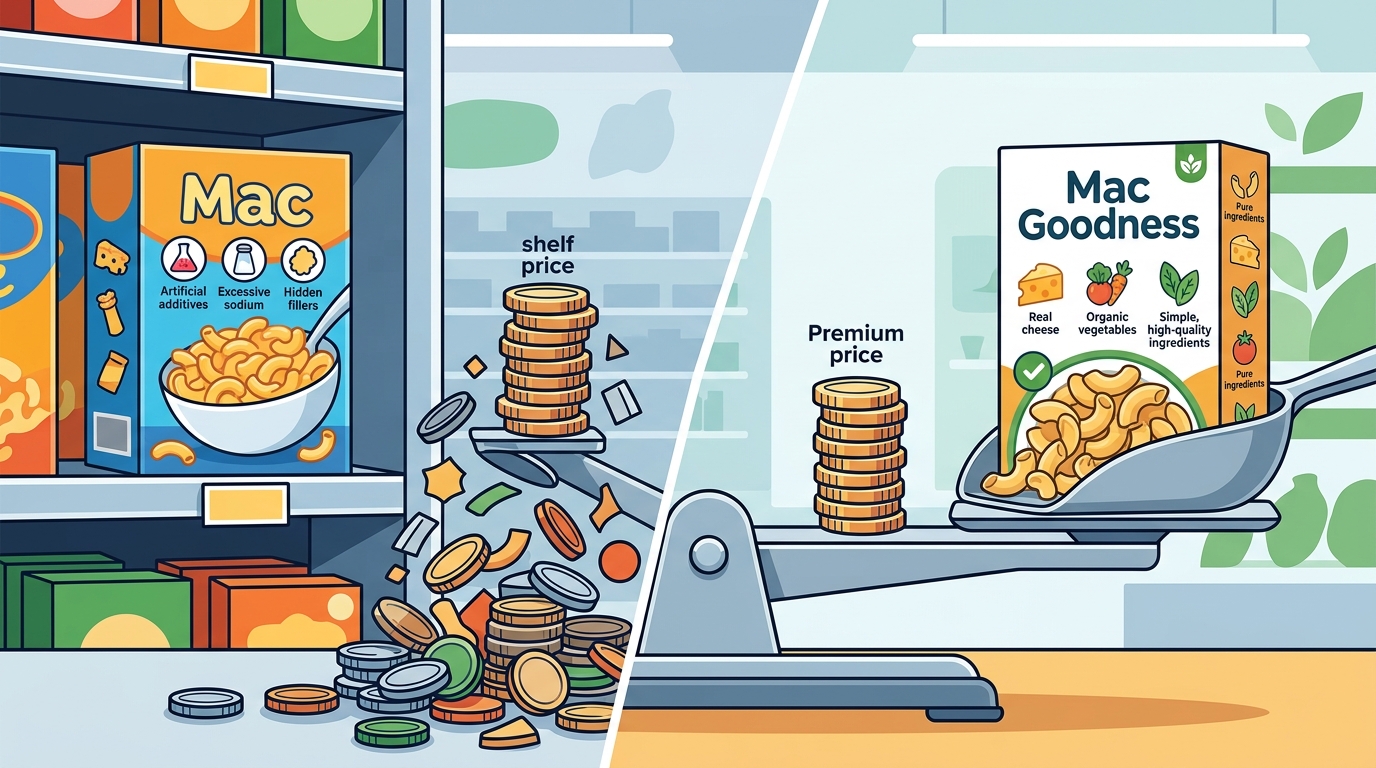
Is Mac Goodness Worth the Premium?
When evaluating the cost of healthy mac and cheese, Mac Goodness offers a compelling value proposition. The brand focuses on "Super Good" nutrition. This means more cheese, no fillers, and no junk. The result is a product that is both delicious and nutritious.
The brand was built by a family who wanted better food for their kids. This origin story is reflected in every aspect of the product. From the choice of ingredients to the transparency of the label, Mac Goodness prioritizes quality over cost-cutting. This commitment to quality justifies the premium price point.
For parents who value clean eating, Mac Goodness is a top choice. The brand is available online and in select retail locations in New York City and Boston. The convenience of online ordering makes it easy to incorporate clean mac and cheese into your weekly meal plan. The product is also hero-approved by kids, ensuring that healthy eating is not a battle at the dinner table.
Key Takeaways
- Mac Goodness uses only 3-4 certified organic ingredients, significantly fewer than competitors.
- The brand contains 270mg of sodium per serving, which is about half the amount found in Annie's and Goodles.
- Real white cheddar and organic whole milk are used instead of cheese powder and artificial flavors.
- Vegetable varieties like Green Glory and Super Sight provide natural vitamins and minerals.
- The product is free from gums, thickeners, preservatives, and modified starches.
- Mac Goodness is available for purchase online and in physical stores in NYC and Boston.
- Clean-label products now represent over 60% of new food industry launches.
Frequently Asked Questions
Is Mac Goodness gluten-free?
Mac Goodness uses organic pasta which may contain gluten. Please check the specific product packaging for gluten-free certifications or consult the About page for detailed allergen information.
How does the sodium content compare to traditional mac and cheese?
Traditional boxed mac and cheese can contain over 800mg of sodium per serving. Mac Goodness reduces this to 270mg, making it a much healthier option for growing children.
Are the vegetables in Mac Goodness real or powdered?
The vegetables are real. Mac Goodness uses actual spinach, carrots, and sweet potatoes to infuse flavor and nutrition naturally.
Where can I buy Mac Goodness?
You can order directly from macgoodness.com or find it in select retail locations in New York City and Boston.
Why is Mac Goodness more expensive than other brands?
The higher cost reflects the use of premium organic ingredients, real cheese, and the absence of cheap fillers and artificial additives.
Is Mac Goodness suitable for picky eaters?
Yes, the brand is designed to be delicious and familiar. Many parents report that their picky eaters enjoy the taste while benefiting from the clean ingredients.
Does Mac Goodness contain any artificial flavors?
No, Mac Goodness contains no artificial flavors, colors, or preservatives. All flavor comes from real, organic ingredients.
Shop Clean Mac & Cheese
Make the switch to healthier mac and cheese today. Experience the difference that real ingredients and low sodium can make for your family. Visit shop to explore our range of hero-approved flavors. Join the thousands of families who have chosen clean, nutritious, and delicious mac and cheese.