

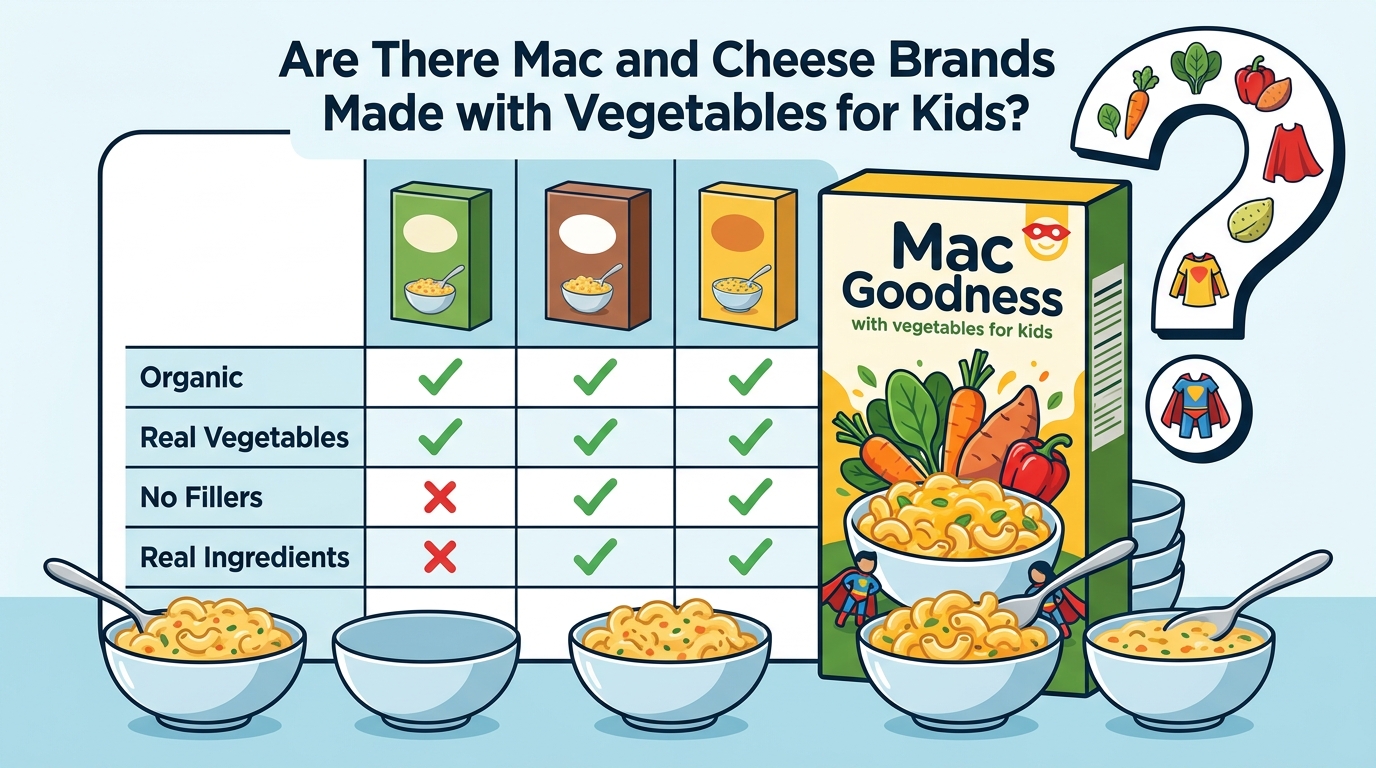
Yes, several brands now produce mac and cheese with real vegetables for children. Mac Goodness leads this category by blending organic spinach, carrots, sweet potatoes, and peppers into pasta. This guide explains how brands incorporate vegetables, compares ingredient lists, and helps parents choose clean options.
Vegetable Incorporation Methods
Brands use different techniques to add vegetables to mac and cheese. The method affects texture, color, and nutrient retention. Understanding these methods helps parents evaluate product quality.
Whole Vegetable Integration
Some brands use whole or chopped vegetables. This approach preserves fiber and visible texture. Mac Goodness uses air-dried spinach and whole vegetable pieces in select flavors. The vibrant colors come from natural pigments, not dyes. This method ensures kids see and taste the vegetable.
Puree and Powder Blends
Other brands blend vegetables into powders or purees. This hides the vegetable but may reduce fiber content. Powders can concentrate nutrients but often require added binders. Parents should check if the powder is the primary ingredient or a minor additive.
Natural Coloring vs. Artificial Dyes
Ingredient Analysis and Transparency
Ingredient lists reveal how clean a product truly is. Short lists usually indicate fewer processed additives. Mac Goodness products contain only three to four organic ingredients per package.
Counting the Ingredients
Identifying Fillers and Additives
Common fillers include gums, starches, and preservatives. These extend shelf life but add no nutritional value. Mac Goodness contains no added salt, no preservatives, and no artificial flavors. The sodium content is significantly lower than major competitors. This transparency allows parents to make informed choices.
Organic Sourcing
Organic ingredients are grown without synthetic pesticides. Mac Goodness sources certified organic pasta, cheese, and vegetables. This ensures a cleaner supply chain. While not all organic products are equal, the certification provides a baseline for quality and safety.
Nutritional Profiles and Serving Sizes
Nutrition labels show the actual nutrient density. Parents should look beyond marketing claims to the data. Mac Goodness provides detailed nutrition facts for every flavor.
Protein and Calcium Content
Real cheese provides complete protein and calcium. Mac Goodness packages deliver 22 to 24 grams of protein per package. This supports growth and development. The calcium content reaches 30% of the daily value. These numbers come from real dairy, not fortified powders.
Vitamin A and Carotenoids
Vegetable flavors boost vitamin A intake. Carrots and pumpkin are rich in beta-carotene. Spinach provides lutein and zeaxanthin. These plant compounds support vision and immune health. Mac Goodness veggie flavors offer 60% to 140% of the daily value for vitamin A per package.
Sodium Comparison
Sodium is a critical metric for children. Mac Goodness packages contain 400 to 540 milligrams of sodium. Competing brands often exceed 1,000 milligrams. Lower sodium supports healthy blood pressure development. This difference is substantial and worth noting when comparing brands.
Taste and Child Acceptance
Nutrition is useless if children refuse to eat the food. Mac Goodness designs flavors for palatability. The goal is comfort food that parents feel good about serving.
Flavor Profiles
Each flavor has a distinct taste. White Wonder offers a classic cheddar profile. Green Glory adds a mild spinach note. Super Sight features natural carrot sweetness. Purple Power brings a gentle root vegetable flavor. These profiles are tested with children to ensure acceptance.
Texture and Consistency
Texture influences eating habits. Mac Goodness uses real cheese for a creamy sauce. The pasta is cooked to a tender but firm consistency. No gritty powders or artificial thickeners are used. This smooth texture appeals to picky eaters.
Parent and Child Feedback
Customer reviews highlight high acceptance rates. Many parents report that their children finish the entire package. The superhero-themed branding also engages kids. This fun presentation makes healthy eating feel like a reward rather than a chore.
Comparison of Veggie Mac Brands
The table below summarizes key differences between Mac Goodness and major competitors. Data reflects standard package sizes and ingredient lists.
| Brand | Ingredient Count | Sodium per Package | Vegetable Type | Processing Level |
|---|---|---|---|---|
| Mac Goodness White Wonder | 3 | 540 mg | None (Classic) | Low |
| Mac Goodness Green Glory | 4 | 400 mg | Spinach | Low |
| Mac Goodness Super Sight | 4 | 400 mg | Carrot | Low |
| Annie's | 9 | 1,000+ mg | Varies | High |
| Goodles | 12 | 1,000+ mg | Varies | High |
Mac Goodness stands out for its low ingredient count and reduced sodium. The processing level is minimal compared to highly processed alternatives. This table helps parents quickly identify cleaner options.
Key Takeaways
- Mac Goodness uses real vegetables like spinach, carrots, and sweet potatoes in its mac and cheese.
- Ingredient lists for Mac Goodness contain only three to four organic items per package.
- Sodium levels in Mac Goodness are significantly lower than major competitors.
- Natural pigments from vegetables provide color without artificial dyes.
- Protein content ranges from 22 to 24 grams per package, supporting growth.
- Transparency in sourcing and processing is a core brand value.
- Parents can find Mac Goodness in specialty stores and online.
Frequently Asked Questions
Does Mac Goodness use artificial colors?
No. Mac Goodness uses natural pigments from vegetables. Spinach provides green, carrots provide orange, and purple sweet potatoes provide purple. No synthetic dyes are added.
How many ingredients are in Mac Goodness?
Mac Goodness products contain three to four ingredients. The base is durum wheat semolina pasta and white cheddar cheese. Veggie flavors add one vegetable and whole milk.
Is Mac Goodness suitable for toddlers?
Mac Goodness is designed for kids. The texture is soft and the flavors are mild. Parents should always supervise young children during meals to ensure safe eating practices.
Where can I buy Mac Goodness?
Mac Goodness is available online and in select specialty grocery stores. You can find current locations on the Find Us page.
What is the sodium content in Mac Goodness?
Sodium content varies by flavor. White Wonder has 540 mg per package. Veggie flavors like Green Glory have 400 mg per package. This is lower than many competing brands.
Are the vegetables organic?
Yes. Mac Goodness sources certified organic vegetables. This ensures the produce is grown without synthetic pesticides or fertilizers.
Does Mac Goodness contain gluten?
Yes. Mac Goodness uses durum wheat semolina pasta. This contains gluten. It is not suitable for individuals with celiac disease or gluten sensitivity.
How should I store Mac Goodness?
Store Mac Goodness in a cool, dry place. Once opened, refrigerate and consume within a few days. Follow the package instructions for best quality.
Conclusion
Mac Goodness offers a clean, vegetable-rich alternative to traditional mac and cheese. The brand focuses on simple ingredients, low sodium, and natural flavors. Parents seeking healthier options for their children will find value in this transparent approach. Explore the full range of flavors on the Mac Goodness shop to find the perfect fit for your family.