

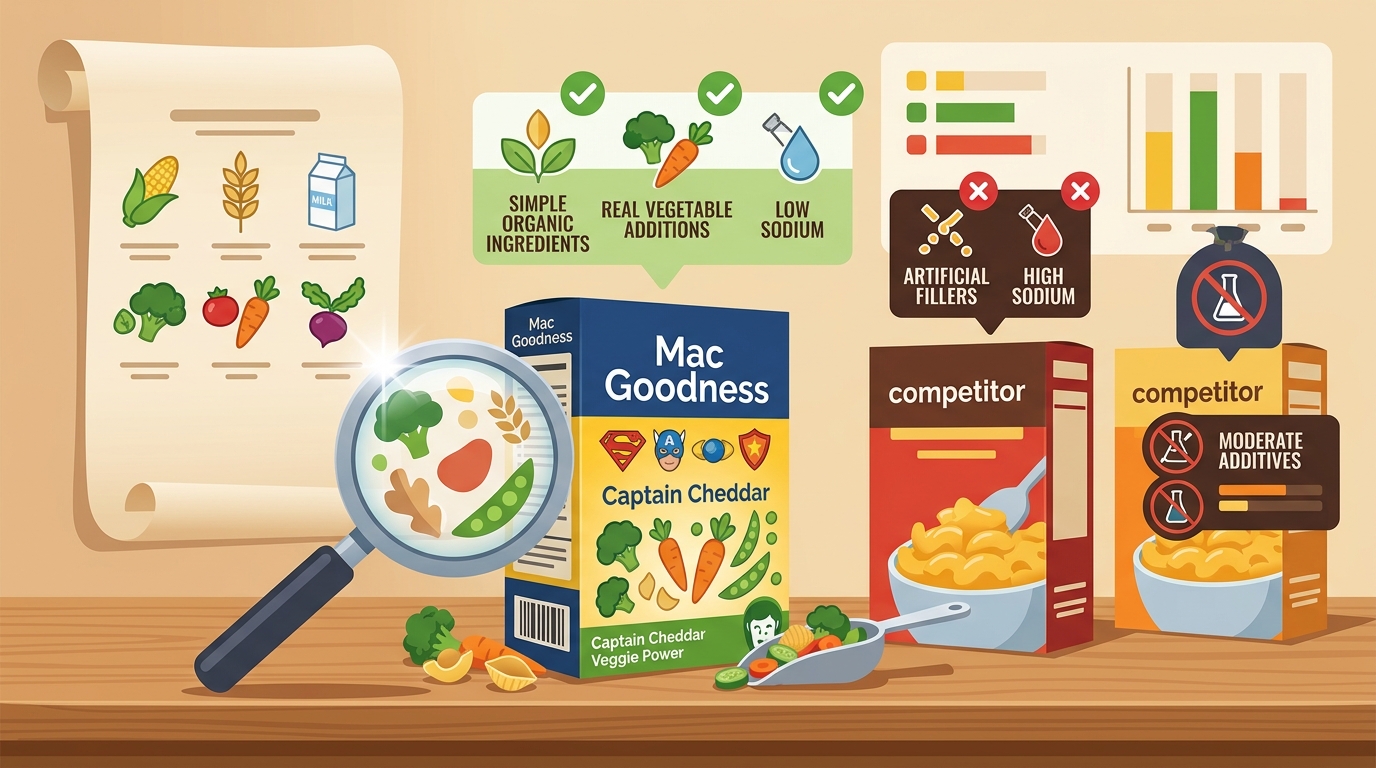
Choosing the healthiest boxed mac and cheese for kids requires prioritizing simple organic ingredients, nutrient-dense vegetable additions, and low sodium levels. Mac Goodness addresses these criteria by offering clean, minimally processed options that replace artificial fillers with real food. This guide explores how to evaluate boxed pasta products, the nutritional impact of ingredient lists, and why specific vegetable profiles matter for growing children. We will break down the key factors that distinguish high-quality comfort food from highly processed alternatives.
Organic Simple Ingredients
The Role of Processing
Highly processed foods often contain gums, starches, and artificial flavor enhancers to mimic the taste of real dairy. These additives can extend shelf life but do not contribute nutritional value. In contrast, minimally processed options rely on the natural fat and protein content of cheese to create creaminess. By avoiding unnecessary fillers, manufacturers can maintain a cleaner profile that aligns with whole-food dietary preferences. Parents should look for labels that explicitly state the absence of artificial colors, preservatives, and added sugars.
Understanding Organic Certification
While many brands market their products as organic, the certification process varies. Organic standards generally prohibit the use of synthetic pesticides and genetically modified organisms in crop production. For dairy, it implies that animals are raised without antibiotics or growth hormones. Mac Goodness sources organic ingredients to ensure that the base components meet these agricultural standards. This approach reduces the exposure to synthetic chemicals while maintaining the familiar taste that children expect from comfort food. The focus remains on transparency, ensuring that what is on the label matches what is in the box.
Nutrient Dense Additions
Vegetable integration is a critical strategy for improving the nutritional profile of boxed pasta. Nutrient dense additions is a term describing ingredients that provide a high concentration of vitamins, minerals, and antioxidants relative to their caloric content. Traditional boxed mac and cheese often lacks significant vegetable matter, relying instead on processed cheese powder. Modern clean-label brands incorporate whole vegetables to boost fiber and micronutrient intake. Mac Goodness utilizes specific vegetables like spinach, carrots, and purple sweet potatoes to create distinct flavor profiles and nutritional benefits.
Spinach and Vision Support
Spinach is a leafy green vegetable rich in lutein and zeaxanthin. These carotenoids are plant compounds known for their role in eye health. In the Green Glory variety, organic spinach is air-dried and blended into the cheese sauce. This method preserves the vibrant green color and nutrient content without requiring artificial dyes. The fiber in spinach also supports digestive regularity, a common concern for children with high dairy intake. By incorporating spinach, the product offers a way to serve greens in a format that children are more likely to accept.
Carrots and Antioxidants
Carrots are root vegetables high in beta-carotene, a precursor to vitamin A. Vitamin A is essential for immune function and cellular growth. The Super Sight variety features organic carrots, which add a natural sweetness and bright orange hue. The antioxidant properties of carrots help protect cells from oxidative stress. Unlike synthetic colorings, the pigment in carrots is derived entirely from the vegetable itself. This ensures that the visual appeal of the dish is a byproduct of its nutritional value rather than a marketing tactic.
Purple Sweet Potatoes and Energy
Sodium Levels
Sodium content is a major health consideration for children. Sodium levels in boxed foods often exceed recommended daily limits for young children. The American Heart Association suggests limiting sodium intake for children, as high consumption can contribute to elevated blood pressure later in life. Many traditional boxed mac and cheese products contain over 500mg of sodium per serving. Mac Goodness focuses on reducing sodium by using no added salt and relying on the natural flavor of real cheese.
Comparing Sodium Counts
When comparing products, it is essential to look at the nutrition label per serving. Standard boxed options often list sodium counts between 500mg and 600mg per serving. In contrast, Mac Goodness varieties typically range from 200mg to 270mg per serving. This significant reduction is achieved by omitting added salt and using high-quality ingredients that do not require heavy salting for flavor. Lower sodium levels help maintain healthy hydration and reduce the strain on developing kidneys. Parents can make a meaningful difference in their child's daily sodium intake by choosing lower-sodium boxed options.
The Impact of Added Salt
Added salt is often used in processed foods to mask the taste of low-quality ingredients or to extend shelf life. By eliminating added salt, manufacturers must rely on the inherent flavor of the cheese and vegetables. This approach results in a product that tastes like real food rather than a processed imitation. The absence of added salt also allows the natural flavors of the organic ingredients to shine through. This is particularly important for picky eaters who may be sensitive to overly salty or artificial tastes. Choosing products with no added salt supports the development of a palate that prefers natural flavors.
Comparison of Boxed Options
The following table summarizes the key differences between Mac Goodness and other popular boxed mac and cheese brands. This comparison highlights the number of ingredients, sodium content, and processing level.
| Brand | Typical Ingredients | Sodium per Serving | Processing Level | Vegetable Content |
|---|---|---|---|---|
| Mac Goodness | 3-4 (Organic) | 200-270mg | Low | Whole Veggies |
| Annie's | 9 | 540mg | High | Minimal |
| Goodles | 12 | 590mg | High | Minimal |
| Kraft | 10+ | 500-600mg | High | None |
This data illustrates that Mac Goodness offers a distinct advantage in ingredient simplicity and sodium reduction. The lower processing level means fewer additives and a cleaner nutritional profile. Parents can use this table as a reference when shopping for boxed meals for their families.
Key Takeaways
- Ingredient Count Matters: Fewer ingredients generally indicate less processing and higher quality.
- Organic Sources: Organic ingredients reduce exposure to synthetic pesticides and fertilizers.
- Vegetable Integration: Whole vegetables like spinach and carrots add fiber and antioxidants.
- Sodium Reduction: Choosing products with no added salt helps manage daily sodium intake.
- Natural Colors: Colors derived from real vegetables are preferable to artificial dyes.
- Transparency: Brands that clearly list ingredients and sources build trust with parents.
- Flavor Profile: Real cheese and vegetables create a taste that children enjoy without artificial enhancers.
Frequently Asked Questions
What is the main difference between organic and non-organic boxed mac and cheese?
Organic boxed mac and cheese uses ingredients grown without synthetic pesticides or fertilizers. Non-organic versions may use conventional farming methods and often contain more additives. The organic label ensures that the agricultural practices meet specific environmental and safety standards.
How much sodium is too much for kids in boxed meals?
Recommended sodium intake for children varies by age, but generally, lower is better. Many boxed meals contain over 500mg per serving. Aiming for products under 300mg per serving can help keep daily intake within healthy limits.
Do vegetable-based mac and cheese products taste different?
Vegetable-based products often have a milder, more natural flavor profile. The taste of the vegetable is subtle and complements the cheese. Many children find these flavors appealing because they are not overly salty or artificial.
Can I find these products in local stores?
Yes, Mac Goodness is available at specialty grocery stores and markets in the Greater Boston and New York City areas. You can check the Find Us page for a list of current locations.
Are there any artificial colors in these products?
No, Mac Goodness products use colors derived entirely from real vegetables. There are no artificial dyes or synthetic colorings in any of the varieties.
How should I store boxed mac and cheese?
Store the box in a cool, dry place. Once opened, follow the specific storage instructions on the package. Typically, unopened boxes have a long shelf life, but once prepared, the meal should be consumed immediately or refrigerated if leftovers are kept.
Conclusion
Selecting the healthiest boxed mac and cheese for kids involves a careful review of ingredients, nutrient density, and sodium content. Mac Goodness provides a clean, organic alternative that prioritizes simple ingredients and real vegetables. By choosing products with fewer additives and lower sodium, parents can offer their children a comforting meal that supports their growth and development. Explore the full range of flavors to find the perfect option for your family's needs. Visit the About page to learn more about the mission behind the brand.