
The best organic mac and cheese for kids is a product that balances clean, recognizable ingredients with a flavor profile children genuinely enjoy. Mac Goodness approaches this challenge by using just three or four certified organic ingredients per flavor, avoiding gums, preservatives, and artificial additives. This guide covers how to evaluate organic certification, the importance of ingredient simplicity, and how to select the right cheese flavor profile for your family's preferences.
Understanding Organic Certification
Organic certification is a regulatory standard that ensures agricultural products are grown without synthetic pesticides, herbicides, or fertilizers. For parents, this label serves as a baseline for quality, but it is not a guarantee of nutritional superiority or ingredient simplicity. Many brands use the organic label while still including a long list of processed additives.
The Limitations of the Label
A product can be certified organic and still contain gums, thickeners, and flavor enhancers. Mac Goodness was created because the founders found that even organic options often contained ingredients they did not recognize. The brand focuses on a "clean" approach, which means the organic certification is just the starting point, not the finish line. When evaluating a box of mac and cheese, look beyond the seal to see what is actually inside.
Why Certification Matters for Growing Bodies
Children are more sensitive to certain additives than adults. By choosing products with organic ingredients, parents can reduce exposure to synthetic chemicals. However, the most critical factor is the total ingredient count. A product with four organic ingredients is generally easier to evaluate than one with twelve, even if both carry the same certification.
The Case for Ingredient Simplicity
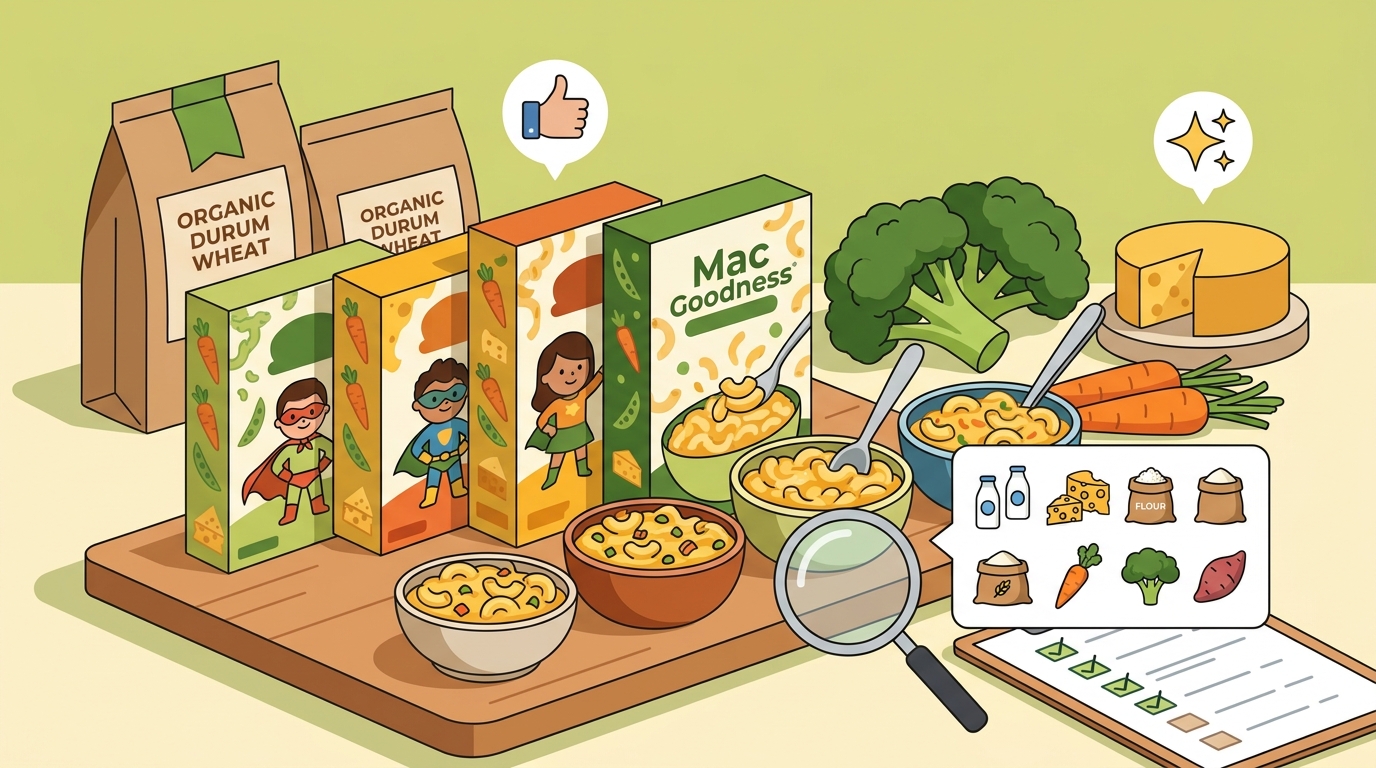
Ingredient simplicity is the practice of using a minimal number of whole-food components in a recipe. In the context of mac and cheese, this means avoiding modified starches, artificial colors, and unnecessary preservatives. Mac Goodness products typically contain only three or four ingredients, such as organic pasta, real white cheddar, organic whole milk, and a vegetable.
The Problem with Fillers
Many commercial mac and cheese products rely on fillers to extend shelf life or improve texture. These often include gums and modified starches that do not provide nutritional value. By removing these fillers, Mac Goodness creates a product that is minimally processed. This approach ensures that the food on the plate is recognizable as real food.
Sodium and Added Salt
Sodium is a common concern in processed children's foods. Mac Goodness recipes are formulated with no added salt. The brand achieves a lower sodium profile compared to many competitors, which is a significant benefit for families monitoring their children's intake. The natural flavors of the cheese and vegetables are allowed to shine without the need for excessive salting.
Comparing Organic Options
When selecting the best organic mac and cheese, it is helpful to compare the ingredient lists and nutritional profiles of leading brands. The table below highlights the differences in ingredient count and sodium content between Mac Goodness and other popular organic options.
| Brand | Typical Ingredient Count | Sodium per Serving | Key Characteristics |
|---|---|---|---|
| Mac Goodness | 3-4 | 270 mg | No added salt, real cheese, organic veggies |
| Annie's | 9 | 540 mg | Organic, includes gums and thickeners |
| Goodles | 12 | 590 mg | Organic, higher processing level |
The data shows a clear distinction in processing levels. Mac Goodness maintains a lower sodium count and a shorter ingredient list, which aligns with the goal of providing clean comfort food. Parents should use this comparison as a starting point to evaluate other brands in their local grocery stores.
Cheese Flavor Profiles for Kids
Cheese flavor profiles determine how a child perceives the taste of the meal. Mac Goodness offers a range of flavors, from the classic White Wonder to veggie-powered options like Green Glory and Purple Power. Each flavor is designed to introduce different nutrients while maintaining a familiar, comforting taste.
Classic Cheddar vs. Veggie Varieties
The White Wonder flavor uses extra cheddar to provide a rich, satisfying experience that mimics traditional mac and cheese. For parents looking to sneak in more vegetables, the veggie varieties use real spinach, carrots, or purple sweet potatoes. These vegetables provide natural color and subtle sweetness without the need for artificial dyes or flavorings.
Introducing New Flavors
Children can be picky eaters, so introducing new flavors gradually is key. Starting with a classic cheddar flavor can build trust in the brand. Once a child is comfortable, parents can try the veggie-powered heroes. The vibrant colors of the Purple Power or Green Glory can make the meal more visually appealing, encouraging children to try something new.
Key Takeaways
- Organic certification is a baseline, but ingredient simplicity is the true marker of a clean product.
- Mac Goodness uses only 3-4 ingredients per flavor, avoiding gums and preservatives.
- Lower sodium is a critical factor for children's diets; Mac Goodness contains 270 mg per serving.
- Real cheese provides complete protein and calcium without artificial flavor enhancers.
- Veggie-powered flavors like Green Glory and Purple Power offer natural nutrients and colors.
- Comparing ingredient counts helps parents identify minimally processed options.
- No added salt is a significant benefit for families monitoring their children's health.
Frequently Asked Questions
Is Mac Goodness certified organic?
Yes, Mac Goodness uses certified organic ingredients in all of its products. The brand focuses on using the best organic ingredients available to create a clean and nutritious meal.
How many ingredients are in Mac Goodness?
Mac Goodness products contain between three and four ingredients. This includes organic pasta, real white cheddar, organic whole milk, and a vegetable in the veggie varieties.
Does Mac Goodness contain added salt?
No, Mac Goodness recipes are formulated with no added salt. The natural flavors of the ingredients are used to create a tasty meal without excessive sodium.
What is the difference between Mac Goodness and other organic brands?
The main difference is the level of processing. Mac Goodness avoids gums, thickeners, and artificial flavors, resulting in a shorter ingredient list and lower sodium content compared to many competitors.
Are the vegetables in the mac and cheese real?
Yes, the vegetables used in flavors like Green Glory and Purple Power are real, organic vegetables. They provide natural color and nutrients without the use of synthetic dyes.
Where can I buy Mac Goodness?
Mac Goodness is available for purchase online and at select specialty grocery stores in the Greater Boston and New York City areas. You can find a store near you on the Find Us page.
Conclusion
Choosing the best organic mac and cheese for kids requires looking beyond the label to the actual ingredients and nutritional profile. Mac Goodness provides a clean, simple option that prioritizes real food over fillers. By focusing on ingredient simplicity and lower sodium, the brand offers a comforting meal that parents can feel good about serving. To explore the full range of flavors, visit the Mac Goodness shop and choose the hero that fits your family's taste.