
Parents face a difficult challenge when selecting comfort foods that align with modern nutritional standards. According to recent dietary guidelines, many conventional boxed mac and cheese products contain excessive sodium levels that exceed recommended daily limits for children. This article provides a practical framework for evaluating shelf-stable meals to ensure they support your family's health goals without sacrificing taste.
Step 1: Evaluate the Ingredient List
The foundation of any healthy meal is the ingredient list. You should look for products that prioritize recognizable, whole foods over complex chemical compounds. A clean label typically contains three to four primary components. These usually include organic pasta, real cheese, and organic vegetables.
Many conventional brands rely on gums, thickeners, and artificial flavor enhancers to achieve texture. These additives are often unnecessary when high-quality ingredients are used. Mac Goodness uses a minimalist approach by focusing on real white cheddar and organic whole milk. This ensures the flavor comes from the food itself rather than synthetic sources.
When you inspect the back of the box, ignore the marketing claims on the front. Look specifically for the absence of modified starches and preservatives. If you cannot pronounce an ingredient, it is likely a filler that adds no nutritional value. Our family mission started with a simple desire to create food that is honest and familiar. We believe that real ingredients should do the heavy lifting.
Step 2: Check Sodium Levels
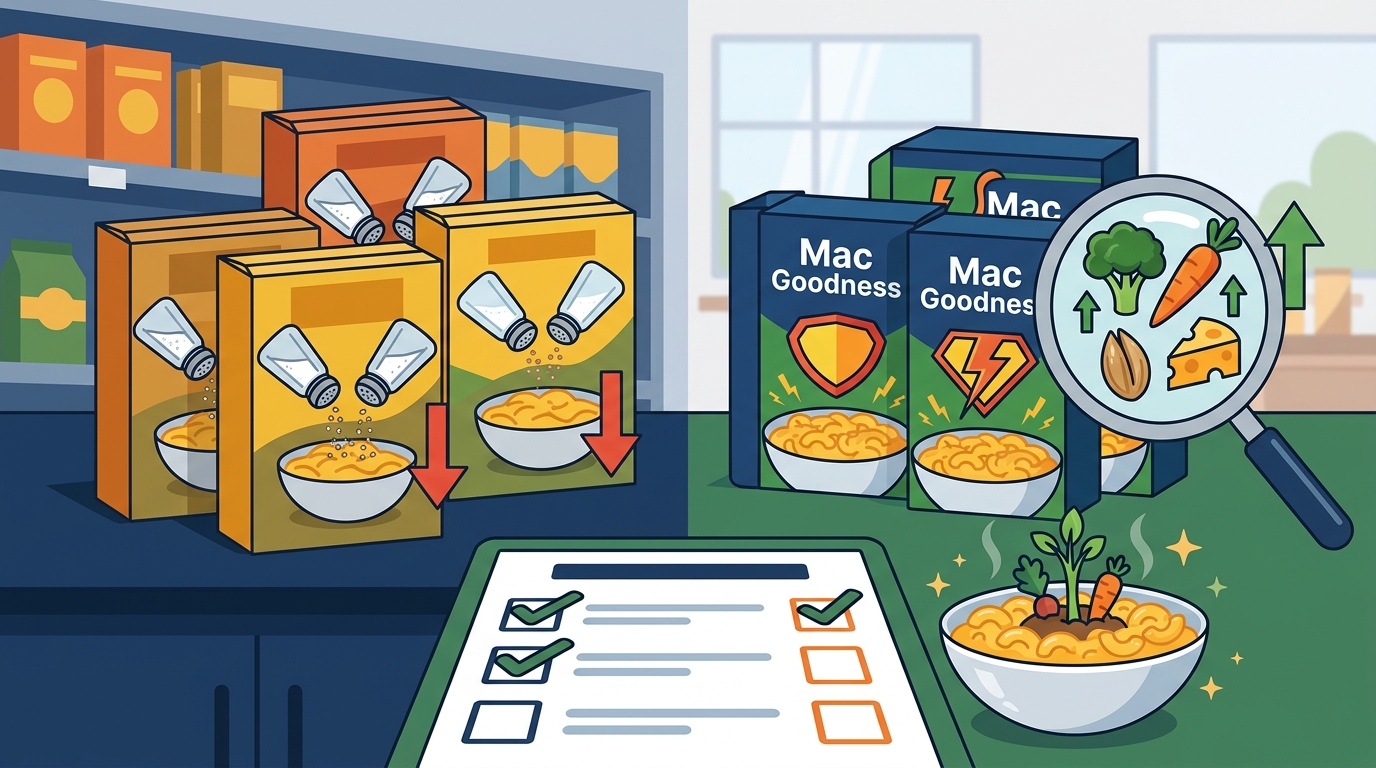
Sodium content is a critical metric for pediatric health. Excessive salt intake in childhood can establish unhealthy taste preferences and impact long-term cardiovascular health. Standard boxed mac and cheese often contains between 500 and 600 milligrams of sodium per serving. This amount can represent a significant portion of a child's daily allowance.
Healthy alternatives aim for at least half the sodium of comparable brands. Mac Goodness delivers only 270 milligrams of sodium per serving. This reduction is achieved by using real cheese and organic vegetables instead of salt-heavy flavor powders. Lower sodium does not mean less flavor. It means the taste is derived from natural sources like carrots, spinach, and sweet potatoes.
When comparing products, look for the "Low Sodium" designation. However, verify the actual milligram count on the nutrition facts panel. Our comparison page details how our sodium levels stack up against major competitors like Annie's and Goodles. Choosing lower sodium options helps your kids eat like heroes without the negative health impacts.
Step 3: Verify Organic Certification
Organic certification ensures that the ingredients were grown without synthetic pesticides or fertilizers. This is particularly important for pasta and dairy products. Organic pasta is made from wheat that is free from chemical residues. Organic dairy provides higher levels of certain nutrients compared to conventional dairy.
Look for the USDA Organic seal on the packaging. This seal guarantees that the product meets strict federal standards. Mac Goodness uses 100% organic ingredients in all its varieties. This includes the pasta, the cheese, and the vegetable blends. Organic certification also prohibits the use of genetically modified organisms (GMOs).
Choosing organic products supports sustainable farming practices. It also reduces your family's exposure to potentially harmful chemicals. Explore our full collection to see how organic ingredients enhance the taste and nutrition of every bag. We source the best organic ingredients to create nutritious recipes that are simple and wholesome.
Step 4: Assess Nutritional Density
Nutritional density refers to the amount of nutrients relative to the calorie count. Healthy mac and cheese should provide protein, calcium, and essential vitamins. Many conventional products offer empty calories with minimal nutritional benefit. They often lack fiber and essential minerals.
Mac Goodness varieties offer up to 24 grams of protein per bag. This protein supports muscle growth and repair in growing children. The inclusion of real vegetables adds significant amounts of Vitamin A, calcium, and fiber. For example, the Green Glory variety provides spinach for iron and vitamins. The Super Sight variety offers carrots for natural sweetness and Vitamin A.
When evaluating nutritional density, check the percentage of daily value for key nutrients. Aim for products that provide at least 20% of the daily value for calcium and fiber. Our mission for better food focuses on filling kids up without fillers. We ensure that every flavor serves a purpose beyond just taste.
Step 5: Compare Brand Options
Not all healthy mac and cheese brands are created equal. It is essential to compare specific metrics across different products. Factors to consider include ingredient count, sodium levels, organic status, and nutritional content. A side-by-side comparison helps you make an informed decision.
| Brand | Ingredient Count | Sodium (mg) | Organic | Key Benefit |
|---|---|---|---|---|
| Mac Goodness | 3-4 | 270 | Yes | Real Cheese, No Junk |
| Annie's | 9 | 540 | Partial | Well-Known Brand |
| Goodles | 12 | 590 | No | High Protein |
As shown in the table, Mac Goodness leads in simplicity and low sodium. The brand uses only three to four ingredients compared to nine or twelve in other brands. This simplicity ensures that every bite is packed with real food. Read our detailed comparison to understand the differences better.
Key Takeaways
- Mac Goodness uses only 3-4 certified organic ingredients per bag.
- Our sodium content is 270mg, which is about half that of comparable brands.
- Real white cheddar is used instead of artificial cheese powders.
- Vegetable varieties provide natural sweetness and essential vitamins.
- The brand was founded by parents seeking cleaner options for their children.
- Available flavors include White Wonder, Green Glory, and Super Sight.
- Organic certification ensures no synthetic pesticides or GMOs.
Frequently Asked Questions
Is Mac Goodness suitable for toddlers?
Yes, Mac Goodness is safe for toddlers. The ingredients are simple, organic, and free from common allergens like gluten and dairy in specific varieties. Our family tested every recipe to ensure it is safe and enjoyable for young children.
How does the sodium compare to other brands?
Mac Goodness contains 270mg of sodium per serving. This is significantly lower than Annie's (540mg) and Goodles (590mg). Lower sodium is better for growing kids and helps establish healthy taste preferences.
What vegetables are included in the flavors?
We use real, whole vegetables in our flavors. Green Glory contains spinach. Super Sight contains carrots. Purple Power contains purple sweet potato. Red Boost contains sweet red pepper. These veggies provide natural nutrients and color.
Are the ingredients non-GMO?
Yes, all our ingredients are certified organic, which inherently prohibits the use of genetically modified organisms. We prioritize clean, recognizable food for your family.
Where can I buy Mac Goodness?
You can order Mac Goodness online through our website. We also have physical locations in New York City and Boston. Check our contact page for more details on local availability.
Does Mac Goodness contain any artificial flavors?
No, Mac Goodness contains no artificial flavors, colors, or preservatives. We believe in the power of real food to deliver great taste and nutrition.
How many servings are in each bag?
Each bag provides multiple servings, making it a convenient option for busy families. The nutritional information on the package details the exact serving size and content.
Shop Now
Ready to make the switch to healthier mac and cheese? Browse our full collection of hero-approved flavors. Choose the option that best fits your family's needs. Order online today and experience the difference of real, organic ingredients. Visit our home page to learn more about our mission.