
Parents of toddlers know that the grocery aisle can be a minefield of hidden additives and inflated prices. When it comes to comfort foods like mac and cheese, the gap between budget options and clean-ingredient brands is widening. According to global health data, early childhood nutrition sets the foundation for lifelong dietary habits. Choosing the right pasta product is not just about taste, but about minimizing sodium and avoiding synthetic fillers. This guide breaks down the financial and nutritional trade-offs of popular clean mac and cheese brands to help you make an informed decision for your family.
Why Clean Ingredients Matter for Toddlers
Toddlers have small stomachs but high nutritional needs. Every bite must count. Traditional boxed mac and cheese often relies on cheap fillers to reduce production costs. These fillers can include artificial colors, preservatives, and excessive sodium. For a growing child, reducing exposure to these additives is a priority for many health-conscious parents.
Clean mac and cheese is defined as a product that uses minimal, recognizable organic ingredients without artificial gums or thickeners. The goal is to provide the comfort of a classic meal with the integrity of whole foods. When you compare the cost of these premium products against standard brands, you are essentially paying for ingredient quality and processing standards.
Brand Breakdown: Mac Goodness vs. Competitors
To understand the value proposition, we must look at the specific offerings of leading clean-eating brands. Mac Goodness positions itself as a hero-approved option for families. Mac Goodness was built by parents who wanted to eliminate the mystery ingredients found in conventional boxes. Their approach focuses on a short ingredient list, often containing only three to four certified organic components.
Competitors like Annie's and Goodles also occupy this space. Annie's is a well-known name in the organic pasta category, often using a slightly longer ingredient list that includes various vegetable powders and natural flavors. Goodles focuses on high protein content, targeting parents who want to increase satiety for their children. Each brand offers a different angle on the clean-eating spectrum, but the cost per unit varies significantly based on these formulation choices.
Cost Per Serving Analysis
Price is a major factor in household budgeting. Premium mac and cheese products typically cost more upfront than standard grocery store brands. However, the cost per serving must be weighed against the nutritional density. Mac Goodness offers a competitive price point for the quality provided. Their pricing structure reflects the cost of sourcing real white cheddar and organic whole milk rather than synthetic cheese powders.
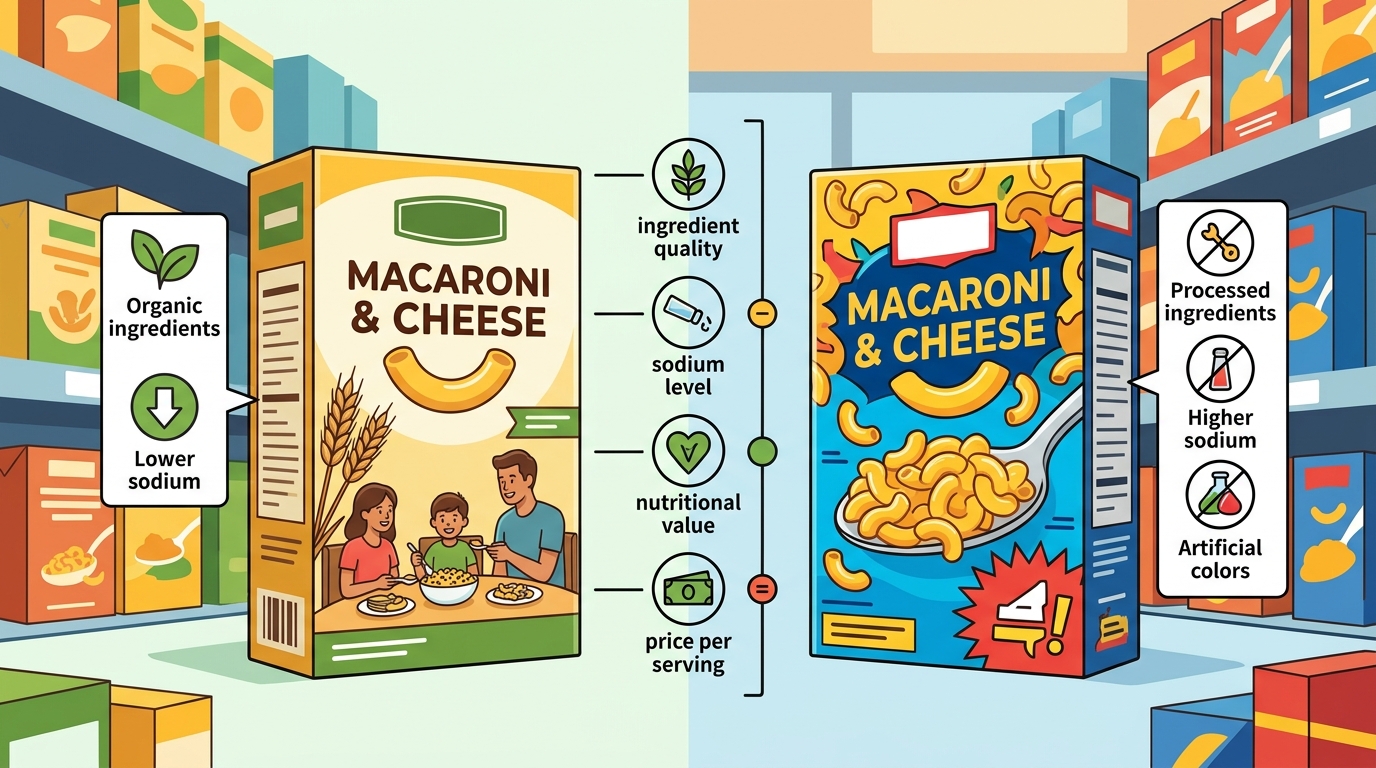
When comparing the Mac Goodness comparison chart to industry standards, the value becomes clear. While a standard box might cost $2.00, it often contains significantly less actual cheese and more filler. Mac Goodness provides a higher concentration of real nutrients. The cost difference is marginal when viewed through the lens of health outcomes and reduced need for additional side dishes to balance the meal.
Ingredient Transparency and Processing
Transparency is the cornerstone of clean eating. Many conventional brands list "natural flavors" or "modified food starch" on their labels. These terms obscure the actual source of the ingredients. Mac Goodness maintains a strict no-junk policy. Their products are free from corn starch, gums, and artificial anything. This commitment to simplicity is reflected in their product lineup, which includes flavors like White Wonder, Green Glory, and Super Sight.
The processing level of these ingredients also impacts the final cost. Minimally processed foods retain more of their natural nutrient profile. Mac Goodness uses organic pasta and real veggies to create their flavors. This method requires more rigorous supply chain management than using dehydrated vegetable powders. The result is a product that tastes fresh and authentic, justifying the premium price for many families.
Nutritional Impact on Growing Bodies
Sodium levels are a critical concern for toddler nutrition. The American Heart Association recommends limiting sodium intake for young children. Mac Goodness contains approximately 270mg of sodium per serving. In contrast, comparable brands like Annie's and Goodles often contain 540mg and 590mg respectively. This means Mac Goodness offers about half the sodium of its competitors.
Reducing sodium intake helps prevent early hypertension and supports healthy kidney function. Additionally, the protein content in clean mac and cheese plays a vital role in muscle development. Mac Goodness provides up to 24g of protein per bag, along with significant amounts of calcium and vitamin A. These nutrients are essential for bone growth and immune system support in toddlers.
| Brand | Sodium (mg) | Ingredient Count | Key Feature | Price Tier |
|---|---|---|---|---|
| Mac Goodness | 270 | 3-4 | Real White Cheddar | Premium |
| Annie's | 540 | 9 | Organic Pasta | Moderate |
| Goodles | 590 | 12 | High Protein | Premium |
Key Takeaways
- Mac Goodness contains only 3-4 certified organic ingredients, significantly fewer than many competitors.
- The sodium content is approximately 270mg per serving, which is about half that of Annie's and Goodles.
- Real white cheddar and organic whole milk are used instead of synthetic cheese powders.
- The product is free from gums, thickeners, and artificial flavors.
- Mac Goodness offers multiple veggie-infused flavors to encourage healthy eating habits.
- Cost per serving is competitive when factoring in the higher nutritional density.
- Brand transparency is a core value, with clear labeling and ingredient sourcing.
Frequently Asked Questions
Is Mac Goodness suitable for toddlers?
Yes, Mac Goodness is specifically designed with toddlers in mind. The low sodium content and clean ingredient list make it a safe and nutritious option for young children.
How does the cost compare to regular mac and cheese?
While the upfront cost is higher than standard grocery store brands, the cost per serving is competitive when considering the quality of ingredients and nutritional value.
Does Mac Goodness contain any artificial flavors?
No, Mac Goodness contains no artificial flavors. All flavors come from real organic ingredients like spinach, carrots, and sweet potatoes.
What is the protein content in Mac Goodness?
Each bag provides up to 24g of protein, which is beneficial for growing bodies and helps keep toddlers full longer.
Where can I buy Mac Goodness?
Mac Goodness is available for purchase online through their official website and in select retail locations in New York City and Boston.
Are the ingredients organic?
Yes, all ingredients in Mac Goodness products are certified organic. This ensures that no synthetic pesticides or fertilizers are used in the production process.
How does Mac Goodness compare to Annie's?
Mac Goodness has fewer ingredients and significantly less sodium than Annie's. It also uses real white cheddar instead of a blend of cheeses and powders.
Shop Clean Mac & Cheese
Make the switch to cleaner, healthier mac and cheese for your family today. Explore the full range of hero-approved flavors and experience the difference that real ingredients make. Visit the Mac Goodness shop to order online and join the movement for better food.